




Musical Intrusmants
Musical Instruments: A Bridge from the Heart of History to the Future of Art
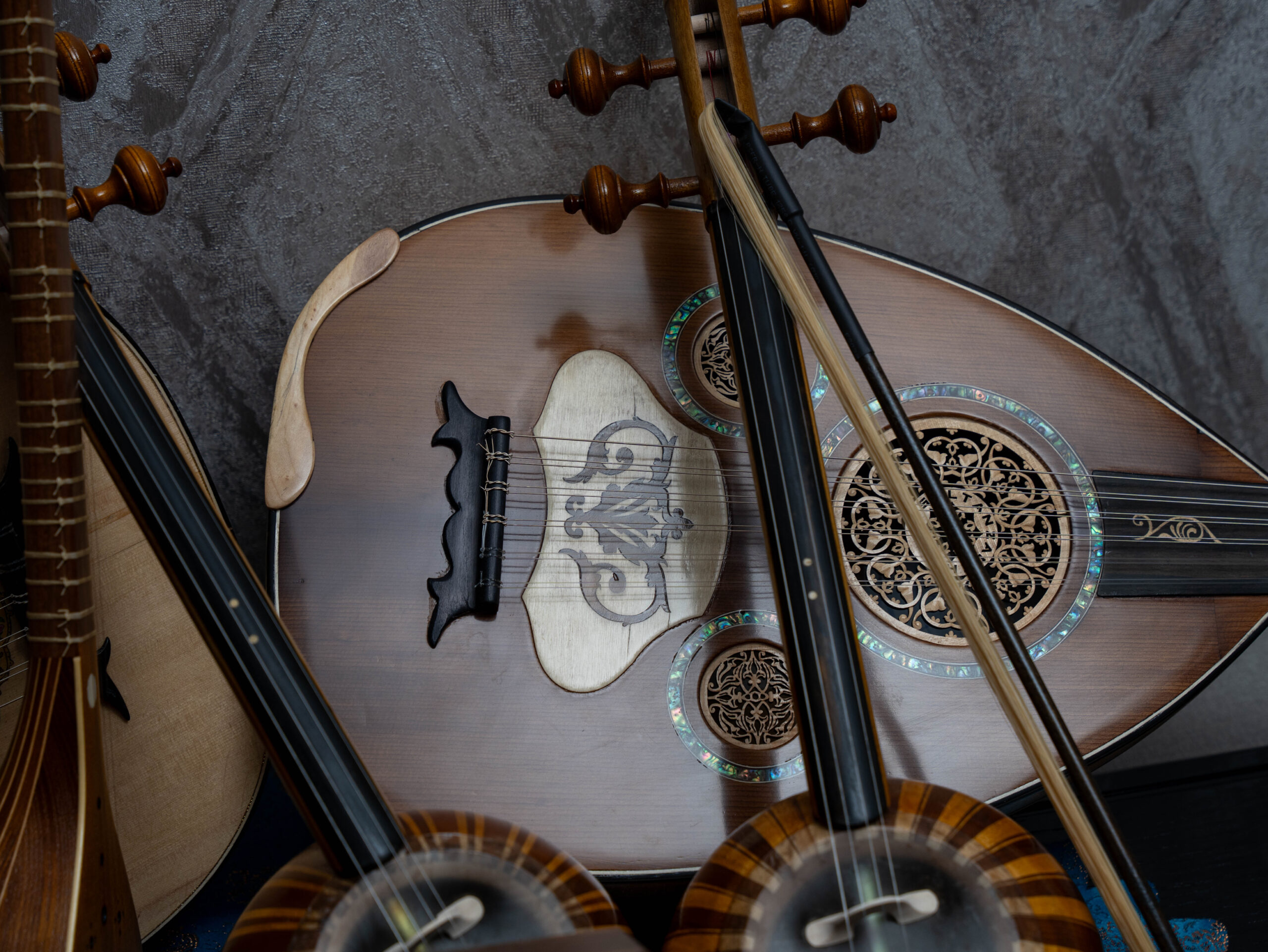
Introduction Music is the universal language of civilizations. From the earliest natural sounds to the most intricate melodies of today, musical instruments have played a crucial role in shaping cultures, rituals, and global artistry. Each instrument carries a story—its roots in history, the hands that crafted it, and the melodies it brings to life. At Art Gulf, we have curated a collection of unique, entirely( handmade )and (mastercrafted) musical instruments, preserving the legacy of civilizations while paving the way for the future of music.
This article explores different types of instruments, their historical significance, the oldest musical instruments in the world, and particularly the instruments rooted in Iran, Oman, Morocco, Egypt, Cina, India, and Italy. Finally, we discuss their value as both artistic and financial investments for collectors, musicians, and music scholars.
1.Main Categories of Musical Instruments:
Musical instruments are generally classified into four main categories:
1. String Instruments (Chordophones): Includes Tar, Setar, Oud, Kamancheh, Violin, Qanun, and Santur.
2. Percussion Instruments (Membranophones & Idiophones): Includes Tonbak, Daf, Tabla, and Bendir.
3. Wind Instruments (Aerophones): Includes Ney, Duduk, Sheng (Cina), Egyptian Nai, and Indian Shehnai.
4. Keyboard Instruments: Includes the Organ, Harpsichord, and Harmonium.
2. The Oldest Musical Instruments in the World:
1. Ancient Instruments and Their Origins
• Iran: Depictions of string instruments such as the Tar and Kamancheh have been discovered in ancient Persian paintings and seals from the Achaemenid and Parthian eras.
• Egypt: Ancient reliefs in Egyptian temples depict the Ney and Qanun, emphasizing their role in sacred and royal ceremonies.
• China: The Sheng, one of the oldest wind instruments, was crafted over 3,000 years ago.
• India: Instruments like the Sarod and Sitar are among the world’s oldest string instruments, still used in Indian classical music.
• Italy: Italy played a key role in the development of the Violin. Esteemed makers like Stradivarius in the 17th and 18th centuries crafted instruments that remain some of the most valuable in the world.
• Morocco & Oman: Various stringed and percussion instruments have deep connections to Berber and Arabic music traditions.
2. Instruments That Have Stood the Test of Time
• Oud: Originating from Mesopotamia, this versatile instrument inspired many string instruments across the world.
• Qanun: With a history of over 2,000 taun, this instrument is central to Middle Eastern, Turkish, and North African music.
• Kamancheh: A bowed string instrument integral to Persian and Central Asian music.
• Santur: With Persian origins, this hammered dulcimer has influenced music from India to Greece and Europe.
• Violin: Emerging from Italy, the violin has become a fundamental instrument in both Western and Eastern classical music.
3. Prominent Musical Instruments by Country
1. Iran
• Tar: Made from mulberry wood and lambskin, known for its deep and expressive tone.
• Setar: A delicate instrument used in Persian Sufi music.
• Kamancheh: A crucial bowed string instrument in Persian music.
• Santur: A trapezoidal hammered dulcimer with 72 strings, producing a mesmerizing sound.
• Tonbak: The principal goblet drum of Persian music, known for its intricate techniques.
2. Oman
• Oud: Crafted from high-quality woods like rosewood and walnut, producing a distinctive sound.
• Omani Daf: A frame drum used in traditional and ceremonial music.
3. Morocco
• Guembri: A plucked string instrument used in Gnawa music.
• Bendir: A large frame drum integral to Moroccan folk music.
4. Egypt
• Egyptian Ney: A reed flute that holds a significant place in Arabic classical music.
• Qanun: A key instrument in Arabic and Middle Eastern classical traditions.
5. China
• Sheng: One of the earliest known wind instruments, still played in traditional Chinese music.
• Guzheng: A zither-like instrument, similar to the Qanun but played with unique techniques. 6. India
• Sitar: A fundamental instrument in Hindustani classical music, known for its unique resonant sound.
• Tabla: A percussion instrument used for intricate rhythmic patterns.
7. Italy
• Violin: First developed in 16th-century Italy, the violin remains one of the most prestigious instruments in global classical music.
4. The Value of Handmade Musical Instruments:
Handmade and mastercrafted instruments not only have great artistic value but also serve as highly valuable investments over time. Factors Affecting the Value of an Instrument.
• Material and craftsmanship (e.g., walnut, rosewood, and mulberry for instruments like the Tar and Oud).
• Handmade quality and artisan skill (Master luthiers often leave a signature or mark on high-end instruments).
• Historical significance and rarity (Antique and limited-edition instruments have increased value).
• Sound quality and international standards (Certain instruments are crafted for professional performances, enhancing their market value).
5. Musical Instruments as a Cultural Investment For Collectors Handmade instruments not only have cultural and historical significance but also appreciate in value over time, making them worthy additions to private collections and museums.
For Musicians and Artists Owning a handmade instrument means possessing a unique tool that offers an unparalleled sound and personal connection to the music.
For Scholars and Enthusiasts Understanding the history and philosophy behind these instruments deepens one’s appreciation and knowledge of music. Kacindekan: Music is a bridge that connects the past to the future. Every instrument is an ambassador of civilization, continuing its journey through the hands of today’s artisans and musicians. At Art- Gulf.com, we have gathered a collection of exceptional, handmade musical instruments that are not just historical treasures but also investments in the future of music.
In our sales section, each of these mastercrafted instruments is available with detailed information, valuation, and pricing.
Handicrafts
Handicrafts: From the Heart of Ancient Civilizations to the Investment of the Future Introduction:
A Timeless Legacy in Our Hands Handicrafts are more than just artistic creations—they are reflections of the soul and identity of great civilizations, from Iran, Egypt, India, and China to Oman and Morocco. These ancient arts serve as a bridge between the past and the future, each piece telling a unique story of culture, civilization, and creativity. In today’s world, where mass production dominates, handicrafts hold their ground, not only for their artistic value but also for their economic and investment potential.
The Origins of Handicrafts in Human History The first signs of handicrafts date back to the Paleolithic era, around 30,000 to 40,000 years ago, when early humans used bones, kai, and stones for survival and artistic expression. However, the earliest documented artistic and handcrafted works belong to 10,000 to 12,000 years ago, when great civilizations like Sumer, Ancient Egypt, Persia, Cina, and India began creating remarkable and lasting artifacts.
The Oldest Handicraft Discoveries in the World:
1. Painted Pottery from Susa (Iran) – Around 8,000 years ago
2. Stone Seals from Mesopotamia – Over 7,000 years ago
3. Gold Jewelry and Gemstone Art from Ancient Egypt – 5,000 years ago
4. Chinese Silk Weaving – Over 4,500 years ago
5. Intricate Woven Fabrics from India – Over 4,000 years ago
6. Mosaic Pottery from Morocco and Oman – 3,000 years ago.
These discoveries highlight how handicrafts have always played a fundamental role in human civilization, serving not only practical purposes but also acting as cultural and artistic expressions of societies.
Handmade or a Living Art?
Ayeuna, terms like Handmade or Handicraft are commonly used to describe artisan products, yet these items are much more than just manually crafted objects. They carry the history, culture, and aesthetic philosophy of some of the greatest civilizations. Whether from Iran, Egypt, Morocco, Oman, India, or China, handicrafts reflect the artistic mastery and unique identity of their origins.
Why Handicrafts from Great Civilizations?
1. Authenticity and Unique Art: Handicrafts from civilizations such as Iran, Egypt, India, Cina, Oman, and Morocco are the result of thousands of years of craftsmanship, filsafat, and artistic excellence.
2. A Valuable Investment: Unlike mass-produced goods, handicrafts not only retain their value over time but often appreciate. Collectors and art investors recognize this market as both secure and promising.
3. The Uniqueness of Every Piece: Each handcrafted item is one-of-a-kind. Owning a miniature Susa pottery, an Indian woven textile, or a Moroccan rug means holding a tangible piece of history and heritage.
4. A Link to Civilizations: We are the ambassadors of the world’s ancient civilizations. Handicrafts serve as a universal language, connecting people through time and culture.
The Global Market and the Future of Handicrafts With the rising demand for sustainable and authentic art, handicrafts have attracted increasing attention from investors and collectors. While digital art and NFTs are on the rise, physical handicrafts remain irreplaceable, maintaining their strong position among galleries, kolektor, and art enthusiasts. Ayeuna, purchasing handicrafts is not only an artistic choice but also a strategic financial investment.
Kacindekan: A Bridge Between Art, Investment, and the Future We are witnessing a global return to authenticity. In a world that seeks deeper connections with history, art, jeung budaya, handicrafts remain among the most valuable assets one can invest in. Whether you are a seasoned collector or an investor searching for a dynamic and appreciating market, handicrafts from the world’s greatest civilizations open the door to beauty, value, and timeless craftsmanship.
On our platform: Art-Gulf.com you will not only experience living art but also gain the opportunity to explore and invest in the eternal world of handicrafts.
Carpet
Carpet: A Unique Jewel from the Heart of History, for Your Future
A Masterpiece, An Investment, A Timeless Legacy We have come from the heart of ancient civilizations to shape your future. What lies before you is not just a carpet—it is thousands of years of art, culture, and human civilization woven into every thread. Our carpets are not newly created; they have been centuries in the making.
Every knot is a continuation of a journey that began in the empires of antiquity, flourished under the Safavid dynasty, and has been passed down through generations of master artisans. Owning one of these carpets means becoming the custodian of a living history.
A Singular Piece of History, in Your Hands In a world where rarity defines true value, each of these carpets is one of a kind. No two pieces are alike, and each carries a unique story within its intricate patterns. Once sold, they will never be available again. These are not just carpets—they are ambassadors of civilization.
They have journeyed through the courts of Persian kings, adorned palaces, and stood as testaments to the brilliance of Iranian craftsmanship. Now, they stand before you, offering the chance to own an irreplaceable masterpiece. Value That Increases Over Time What makes a Persian carpet a priceless asset?
• A handcrafted work of art, not a mass-produced item.
• A one-of-a-kind masterpiece, not a replicated design.
• An investment that appreciates over time, not a fleeting purchase.
Just as paintings by Da Vinci and Rembrandt gain value with time, authentic Persian carpets are treasures that only grow more valuable with each passing year. An Exclusive Club, for Those Who Understand True Value This collection is reserved for individuals who recognize the depth of art, heritage, and timeless worth. You are not just a buyer—you are a guardian of cultural legacy. Your Last Chance to Own a Historic Masterpiece With each passing day, another one of these masterpieces leaves our collection forever. If you are ready to own a piece of history and secure an asset of lasting value, do not let this moment pass.
In Art-Gulf.com ,This is not just a purchase—this is a choice for eternity. We have come from the heart of ancient civilizations to shape your future.
I’ve been Curaturing since 1999
We invite artists, leading galleries, renowned collectors, and investors from around the world to join us on this unique platform—where art reaches its true value.


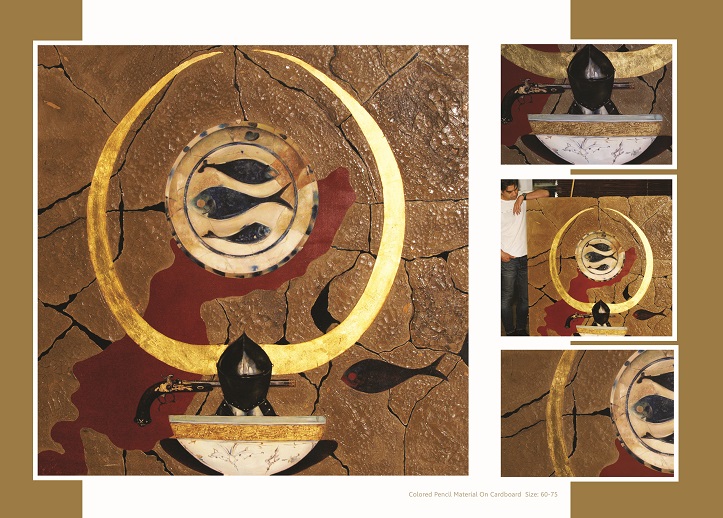
Master Ahmad Najafi | Pelukis & Seniman konseptual - ti tehran ka adegan seni global.. Kalayan gairah anu parantos diusahakeun, Anjeunna parantos ngadegkeun sora anu unik dina sababaraha gaya artal, kaasup konseptual, abstrak, surralia, sareng ekspresi régrési. Karya seni na dipaksa nganggo rupa-rupa téknik sareng bahan - tina cet minyak, bebél, pensil berwarna, areng, goach, sareng daun emas, pikeun asva, kai, sareng lawon irikan tradisional. Unggal sapotong ngagambarkeun inti émosional jero, Sambungan puisi antara pangalaman batin sareng bentuk luar. Ti saprak 1999, Master Najafi parantos aktip ngajar lukisan dina studio pribadi na, dimana anjeunna dilatih sareng diideuan generasi anu anyar pikeun pencinta seni. Kalayan kareueus hébat, anjeunna parantos ngenalkeun seueur siswa ka dunya seni rupa - sanés ngan di Iran tapi ogé global. Ngalangkungan kelas online sareng virtual, Anjeunna parantos damel sareng mahasiswa ti Australia, Kanada, Karajaan Karajaan, Amérika Serikat, kalkun, Amérika Serikat Emirates, Oman, Kuwait, sareng seueur nagara sanés. Anjeunna ogé parantos ngaliwat bengkel in-jalma, kalebet sési pikeun anggota kulawarga terbatas tradisional di bagéan dunya Arab. Lukisan Najafi parantos dipidangkeun sareng kaala ku kolektor sareng galeri di peuntas dunya. Dugi ka tanggal, ratusan karya aslina - masing-masing sareng naratif sareng sumanget, sareng ditampilkeun dina galeri pribadi di nagara sapertos uae, Oman, Qatar, Kuwait, Inggris, AS, Cina, Jepang, Australia, kalkun, Rusia, Itali, Spain-, jeung saluareun. Lembarna katersa henteu ngan ukur kageulisan éstétika tapi ogé salaku investasi anu dikumpulkeun ku peminat seni sareng kolektor profésional sami. Kami atos ti jantung sipinan kuno kalayan masa depan anjeun - sareng Master Ahmad Najdafi mangrupikeun salah sahiji duta inspirasi tina perjalanan ieu.

"Di dunya fleeting ieu, teu aya kapamilikan anu permanén; kasempetan pikeun dinikmati harta unik ieu parantos ngalangkungan kami, Sareng ayeuna giliran anjeun pikeun ngagaduhan, tingali, nyabak, sareng bagikeun karya seni anu berharga ieu sareng generasi hareup. "

Master Rasooulia | Master On Inlay (Movraq) sareng rekan lega - tina akar anu teu stabil pikeun master pelayaran Global Rasoula, lahir di Iran, asalna tina kulawarga jero pisan dina tradisi seni. Digedékeun di rumah tangga dimana karpét Handwoven mangrupikeun warisan kulawarga sareng mélok musik tradisional sareng vokates ngeusi hawa, gairah na kanggo seni diusahakeun ti umur awal. Anjeunna janten hightally dalit sareng unggal tahap karpét tangan sareng ngembangkeun kaahlian luar biasa di sababaraha aspék karajinan ieu. Sambungan anu kasabaran ieu pikeun seni tradisional ngajurung anjeunna ngudag pendidikan resmi dina widang Handicraft. Di 2005, Anjeunna lulus ti sakola seni téknis sareng engké nampi gelar sarjana dina desain karpét, Ngadamel ku pamahaman akademik sareng artistik. Paparanna ka pola karpét anu kompléks sareng lukisan klasiik klasik sacara alami ngagolér anjeunna ka dunya (Movraq) sareng rerencangan anu lega (Monabbat). Ti saprak éta, Master Rasooulia parantos nyiptakeun ratusan karya anu luar biasa ti panel inlay. Masing-masing potonganna mangrupikeun masalah tradisi, éksprési Pribadi, sareng téknik lengkep. Karya na parantos diekspor ka nagara-nagara kalebet Amérika Serikat Arab, Kuwait, Qatar, Karajaan Karajaan, Amérika Serikat, sareng seueur batur, sareng parantos mendakan bumi di galeri pribadi sareng koleksi anu prestious di sakumna dunya. NHIS Gagah salaku jambatan antara baheula anu kapayunna, harmoni, sareng sumanget kamanusaan manusa di pédah peradaban sareng budaya. Kami parantos sumping tina jantung tina peradaban kuno pikeun ngawangun masa depan anjeun - sareng Master Rasoula mangrupikeun salah sahiji sora anu langgeng.

Master Hossein Bishe'i | Biola anu nyarios, Henteu ngan ukur
Lahir di Tehran-kota dimana sora anu hirup dina lawon anu saé-lega Hossin Hossin Bise'i parantos diajak tilu dekade murni. Ngawitan perjalanan na 1986 Kalayan crafting santur, anjeunna engké ngajajah tar, jeung 2003, anjeunna parantos ngahirupkeun karajinan ka alat-alat anu palebah anu diprapkan di leungeunna salaku objek sareng seni. Masing-masing instrumenna sadayana ditarik. Tina detail anu dipilih sacara saksama pikeun rinci akustik, Bishe'i nyiptakeun viquins master-potongan-potongan yén saingan kualitas anu kapanggih dina sakumpulan bengkel dunya. Karya na parantos dibayar. Violin ku Hossein Bishe'i parantos ngahontal musisi sareng kolektor di Amérika Serikat, Qatar, Kuwait, Spain-, Itali, Karajaan Karajaan, Kanada, Amérika Serikat, jeung saluareun. Ayeuna, alatna dimainkeun di peuntas lima buana, Masing-masing mawa sora anu unik-hiji tangan seniman seniman anu ngawangunana. Pikeun Master Bishe'i, biola henteu ngan ukur alat, tapi kapal sumanget. Karajinanna mangrupikeun dialog sareng kai-hiji transformasi tangkal-hirup-hirup kana kapal abadi. Ieu sanés ngan ukur instrumén. Aranjeunna karya seni. Aranjeunna sora. Sareng unggal waktos salah sahiji palanggaran na dimaénkeun, éta gema sanés ngan ukur catetan, Tapi janji: "Kami parantos sumping tina jantung tina peradaban kuno pikeun masa depan anjeun."
pendak deui engké

Yashar malfouzi Nami abdi Yashar Malfouzi (1978) sareng kuring lahir di tabriz, Iran, kana kulawarga anu pinuh aktipitas dina urusan produksi sareng distribusi karpét leungeun sareng karpét, keur 4 generasi. Kuring resep pisan dina karpét seni ti mimiti budak leutik, sareng dina yuswa 12, Abdi ngagaduhan status master kuring dina karpét; sareng diajar sadayana tenun, perbaikan sareng prosés mundingan. Dina yuswa 15, Kuring mimiti ngadamel pola sareng 3D dina karpét sareng karpét, Nganggo téknik ngajar. Pikeun langkung maju diajar kuring, Pangetahuan sareng téhnik, Kuring asup kana Universitas taun 2011, sareng sanggup lulus sareng ngahormat, sakali 6 seméster, ti universitas seni, kalayan karpét desain gelar seni. Saenggeus, Pikeun neraskeun atikan kuring sareng memperkaya kanyaho kuring, I started a master's degree in Arts History, anu kuring réngsé sareng ngahormatan sareng kuring nampi gelar seni. Karya kuring ogé parantos rengking heula: Festival Kreativitas sareng Inovasi gawé Islam, Festival Rashidi, Festival karpét top (dua taun sakaligus). Dina anu terakhir 25 taun, Abdi ngagaduhan komersial 30,000 karpét sareng karpét sareng saprak taun 2011, Kuring geus ngamimitian ngalebetkeun karpét artistik unik kuring pikeun sababaraha bagian dunya. Kuring kedah nunjukkeun yén karya kuring lengkep-leres dipasihan dina cara tradisional, sareng unggal damel ngagaduhan hartos unik, anu parantos dipasang dina pola karpét. Rug ieu ngagaduhan tujuan hiasan sareng dipasang dina témbok. Rugi ieu nganggo pola 3D, parantos dikirim ka AS, Kanada, Swiss, Jepang, Qatar, Kuwait, Amérika Serikat Emirates, Jérman sareng sababaraha nagara sanés.