



Musical Intrusmants
Musical Instruments: A Bridge from the Heart of History to the Future of Art
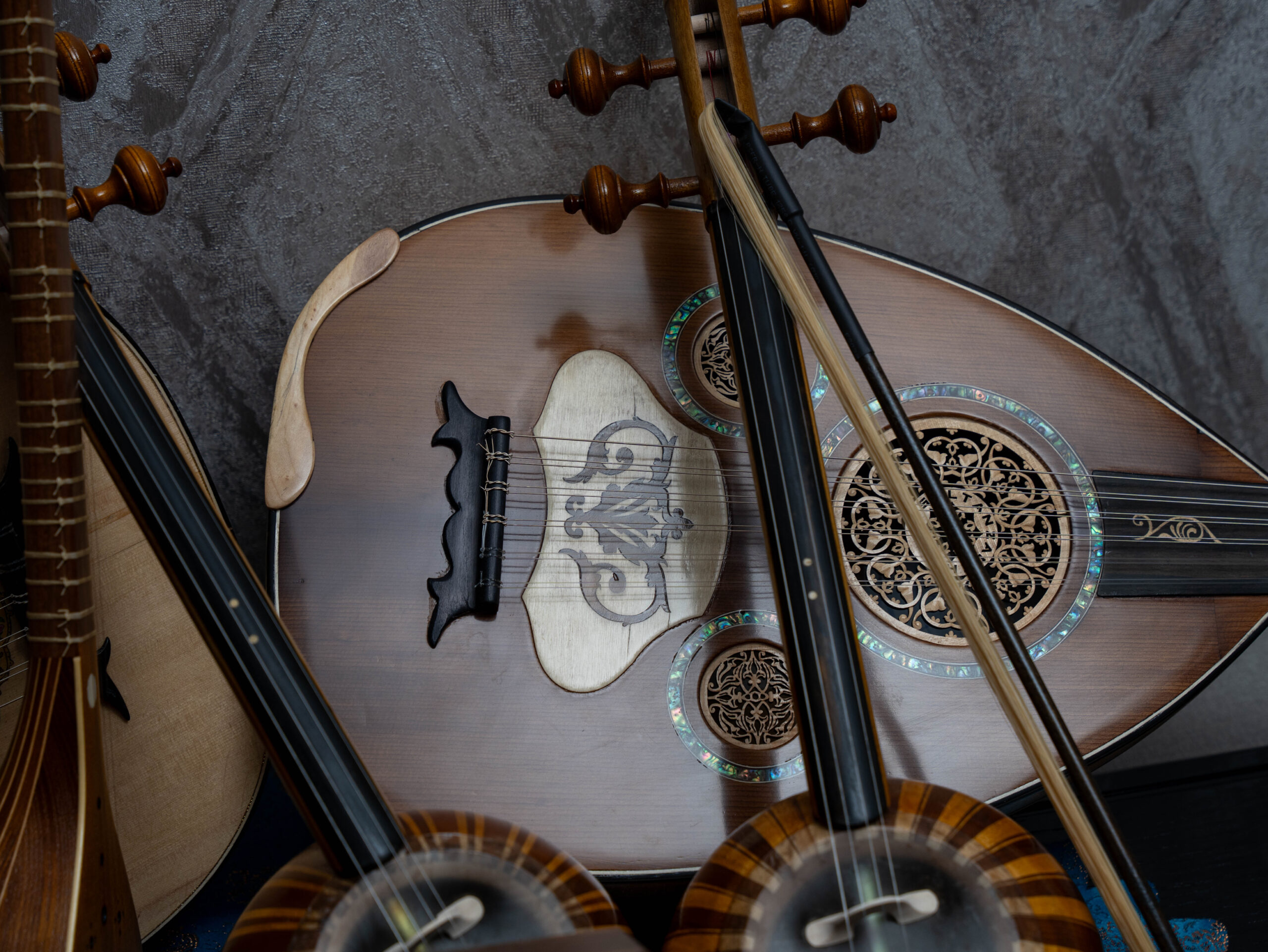
Introduction Music is the universal language of civilizations. From the earliest natural sounds to the most intricate melodies of today, musical instruments have played a crucial role in shaping cultures, rituals, and global artistry. Each instrument carries a story—its roots in history, the hands that crafted it, and the melodies it brings to life. At Art Gulf, we have curated a collection of unique, entirely( handmade )and (mastercrafted) musical instruments, preserving the legacy of civilizations while paving the way for the future of music.
This article explores different types of instruments, their historical significance, the oldest musical instruments in the world, and particularly the instruments rooted in Iran, Oman, Morocco, Egypt, China, India, and Italy. Finally, we discuss their value as both artistic and financial investments for collectors, musicians, and music scholars.
1.Main Categories of Musical Instruments:
Musical instruments are generally classified into four main categories:
1. String Instruments (Chordophones): Includes Tar, Setar, Oud, Kamancheh, Violin, Qanun, and Santur.
2. Percussion Instruments (Membranophones & Idiophones): Includes Tonbak, Daf, Tabla, and Bendir.
3. Wind Instruments (Aerophones): Includes Ney, Duduk, Sheng (China), Egyptian Nai, and Indian Shehnai.
4. Keyboard Instruments: Includes the Organ, Harpsichord, and Harmonium.
2. The Oldest Musical Instruments in the World:
1. Ancient Instruments and Their Origins
• Iran: Depictions of string instruments such as the Tar and Kamancheh have been discovered in ancient Persian paintings and seals from the Achaemenid and Parthian eras.
• Egypt: Ancient reliefs in Egyptian temples depict the Ney and Qanun, emphasizing their role in sacred and royal ceremonies.
• China: The Sheng, one of the oldest wind instruments, was crafted over 3,000 years ago.
• India: Instruments like the Sarod and Sitar are among the world’s oldest string instruments, still used in Indian classical music.
• Italy: Italy played a key role in the development of the Violin. Esteemed makers like Stradivarius in the 17th and 18th centuries crafted instruments that remain some of the most valuable in the world.
• Morocco & Oman: Various stringed and percussion instruments have deep connections to Berber and Arabic music traditions.
2. Instruments That Have Stood the Test of Time
• Oud: Originating from Mesopotamia, this versatile instrument inspired many string instruments across the world.
• Qanun: With a history of over 2,000 taun, this instrument is central to Middle Eastern, Turkish, and North African music.
• Kamancheh: A bowed string instrument integral to Persian and Central Asian music.
• Santur: With Persian origins, this hammered dulcimer has influenced music from India to Greece and Europe.
• Violin: Emerging from Italy, the violin has become a fundamental instrument in both Western and Eastern classical music.
3. Prominent Musical Instruments by Country
1. Iran
• Tar: Made from mulberry wood and lambskin, known for its deep and expressive tone.
• Setar: A delicate instrument used in Persian Sufi music.
• Kamancheh: A crucial bowed string instrument in Persian music.
• Santur: A trapezoidal hammered dulcimer with 72 strings, producing a mesmerizing sound.
• Tonbak: The principal goblet drum of Persian music, known for its intricate techniques.
2. Oman
• Oud: Crafted from high-quality woods like rosewood and walnut, producing a distinctive sound.
• Omani Daf: A frame drum used in traditional and ceremonial music.
3. Morocco
• Guembri: A plucked string instrument used in Gnawa music.
• Bendir: A large frame drum integral to Moroccan folk music.
4. Egypt
• Egyptian Ney: A reed flute that holds a significant place in Arabic classical music.
• Qanun: A key instrument in Arabic and Middle Eastern classical traditions.
5. China
• Sheng: One of the earliest known wind instruments, still played in traditional Chinese music.
• Guzheng: A zither-like instrument, similar to the Qanun but played with unique techniques. 6. India
• Sitar: A fundamental instrument in Hindustani classical music, known for its unique resonant sound.
• Tabla: A percussion instrument used for intricate rhythmic patterns.
7. Italy
• Violin: First developed in 16th-century Italy, the violin remains one of the most prestigious instruments in global classical music.
4. The Value of Handmade Musical Instruments:
Handmade and mastercrafted instruments not only have great artistic value but also serve as highly valuable investments over time. Factors Affecting the Value of an Instrument.
• Material and craftsmanship (e.g., walnut, rosewood, and mulberry for instruments like the Tar and Oud).
• Handmade quality and artisan skill (Master luthiers often leave a signature or mark on high-end instruments).
• Historical significance and rarity (Antique and limited-edition instruments have increased value).
• Sound quality and international standards (Certain instruments are crafted for professional performances, enhancing their market value).
5. Musical Instruments as a Cultural Investment For Collectors Handmade instruments not only have cultural and historical significance but also appreciate in value over time, making them worthy additions to private collections and museums.
For Musicians and Artists Owning a handmade instrument means possessing a unique tool that offers an unparalleled sound and personal connection to the music.
For Scholars and Enthusiasts Understanding the history and philosophy behind these instruments deepens one’s appreciation and knowledge of music. Conclusion: Music is a bridge that connects the past to the future. Every instrument is an ambassador of civilization, continuing its journey through the hands of today’s artisans and musicians. At Art- Gulf.com, we have gathered a collection of exceptional, handmade musical instruments that are not just historical treasures but also investments in the future of music.
In our sales section, each of these mastercrafted instruments is available with detailed information, valuation, and pricing.
Handicrafts
Handicrafts: From the Heart of Ancient Civilizations to the Investment of the Future Introduction:
A Timeless Legacy in Our Hands Handicrafts are more than just artistic creations—they are reflections of the soul and identity of great civilizations, from Iran, Egypt, India, and China to Oman and Morocco. These ancient arts serve as a bridge between the past and the future, each piece telling a unique story of culture, civilization, and creativity. In today’s world, where mass production dominates, handicrafts hold their ground, not only for their artistic value but also for their economic and investment potential.
The Origins of Handicrafts in Human History The first signs of handicrafts date back to the Paleolithic era, around 30,000 to 40,000 years ago, when early humans used bones, Kayu, and stones for survival and artistic expression. Nanging, the earliest documented artistic and handcrafted works belong to 10,000 to 12,000 years ago, when great civilizations like Sumer, Ancient Egypt, Persia, China, and India began creating remarkable and lasting artifacts.
The Oldest Handicraft Discoveries in the World:
1. Painted Pottery from Susa (Iran) – Around 8,000 years ago
2. Stone Seals from Mesopotamia – Over 7,000 years ago
3. Gold Jewelry and Gemstone Art from Ancient Egypt – 5,000 years ago
4. Chinese Silk Weaving – Over 4,500 years ago
5. Intricate Woven Fabrics from India – Over 4,000 years ago
6. Mosaic Pottery from Morocco and Oman – 3,000 years ago.
These discoveries highlight how handicrafts have always played a fundamental role in human civilization, serving not only practical purposes but also acting as cultural and artistic expressions of societies.
Handmade or a Living Art?
Dina iki, terms like Handmade or Handicraft are commonly used to describe artisan products, yet these items are much more than just manually crafted objects. They carry the history, Budaya, and aesthetic philosophy of some of the greatest civilizations. Whether from Iran, Egypt, Morocco, Oman, India, or China, handicrafts reflect the artistic mastery and unique identity of their origins.
Why Handicrafts from Great Civilizations?
1. Authenticity and Unique Art: Handicrafts from civilizations such as Iran, Egypt, India, China, Oman, and Morocco are the result of thousands of years of craftsmanship, Filsafat, and artistic excellence.
2. A Valuable Investment: Unlike mass-produced goods, handicrafts not only retain their value over time but often appreciate. Collectors and art investors recognize this market as both secure and promising.
3. The Uniqueness of Every Piece: Each handcrafted item is one-of-a-kind. Owning a miniature Susa pottery, an Indian woven textile, or a Moroccan rug means holding a tangible piece of history and heritage.
4. A Link to Civilizations: We are the ambassadors of the world’s ancient civilizations. Handicrafts serve as a universal language, connecting people through time and culture.
The Global Market and the Future of Handicrafts With the rising demand for sustainable and authentic art, handicrafts have attracted increasing attention from investors and collectors. While digital art and NFTs are on the rise, physical handicrafts remain irreplaceable, maintaining their strong position among galleries, collectors, and art enthusiasts. Dina iki, purchasing handicrafts is not only an artistic choice but also a strategic financial investment.
Conclusion: A Bridge Between Art, Investment, and the Future We are witnessing a global return to authenticity. In a world that seeks deeper connections with history, art, and culture, handicrafts remain among the most valuable assets one can invest in. Whether you are a seasoned collector or an investor searching for a dynamic and appreciating market, handicrafts from the world’s greatest civilizations open the door to beauty, value, and timeless craftsmanship.
On our platform: Art-Gulf.com you will not only experience living art but also gain the opportunity to explore and invest in the eternal world of handicrafts.
Carpet
Carpet: A Unique Jewel from the Heart of History, for Your Future
A Masterpiece, An Investment, A Timeless Legacy We have come from the heart of ancient civilizations to shape your future. What lies before you is not just a carpet—it is thousands of years of art, Budaya, and human civilization woven into every thread. Our carpets are not newly created; they have been centuries in the making.
Every knot is a continuation of a journey that began in the empires of antiquity, flourished under the Safavid dynasty, and has been passed down through generations of master artisans. Owning one of these carpets means becoming the custodian of a living history.
A Singular Piece of History, in Your Hands In a world where rarity defines true value, each of these carpets is one of a kind. No two pieces are alike, and each carries a unique story within its intricate patterns. Once sold, they will never be available again. These are not just carpets—they are ambassadors of civilization.
They have journeyed through the courts of Persian kings, adorned palaces, and stood as testaments to the brilliance of Iranian craftsmanship. Now, they stand before you, offering the chance to own an irreplaceable masterpiece. Value That Increases Over Time What makes a Persian carpet a priceless asset?
• A handcrafted work of art, not a mass-produced item.
• A one-of-a-kind masterpiece, not a replicated design.
• An investment that appreciates over time, not a fleeting purchase.
Just as paintings by Da Vinci and Rembrandt gain value with time, authentic Persian carpets are treasures that only grow more valuable with each passing year. An Exclusive Club, for Those Who Understand True Value This collection is reserved for individuals who recognize the depth of art, heritage, and timeless worth. You are not just a buyer—you are a guardian of cultural legacy. Your Last Chance to Own a Historic Masterpiece With each passing day, another one of these masterpieces leaves our collection forever. If you are ready to own a piece of history and secure an asset of lasting value, do not let this moment pass.
In Art-Gulf.com ,This is not just a purchase—this is a choice for eternity. We have come from the heart of ancient civilizations to shape your future.
I’ve been Curaturing since 1999
We invite artists, leading galleries, renowned collectors, and investors from around the world to join us on this unique platform—where art reaches its true value.


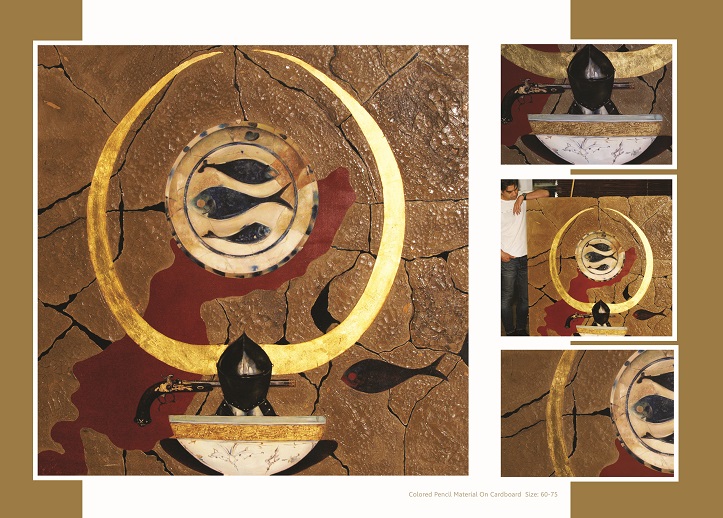
Master Ahmad Najafi | Pelukis & Artis Konsep - Saka Tehran menyang pemandangan seni global .Had Najafi minangka artis Iran Iran sing venionary sing lelungan ing lukisan lan nggambar wiwit taun iki ing Tehran. Kanthi semangat sing wis tahan pirang-pirang puluh taun, Dheweke wis nggawe swara sing unik ing macem-macem gaya seni, kalebu konseptual, Abstrak, Surrealist, lan ekspresi realis. Karya kasebut digawe kanthi nggunakake macem-macem teknik lan bahan - saka cat minyak, pastels, Potlokan berwarna, arang, Gouache, lan godhong emas, kanggo canvases, Kayu, lan kain Iran tradisional. Saben potongan nggambarake inti emosi sing jero, Sambungan puisi antarane pengalaman batin lan formulir njaba. Wiwit 1999, Master Najafi wis aktif nglukis lukisan ing studio pribadi, ing ngendi dheweke wis nglatih lan menehi inspirasi kanggo para penyayang seni anyar. Kanthi bangga banget, Dheweke wis ngenalake akeh siswa ing jagad seni sing apik - ora mung ing Iran, nanging uga global. Liwat kelas online lan virtual, Dheweke wis makarya karo siswa saka Australia, Kanada, Inggris, Amerika Serikat, Turkey, Emirat Arab Inggris, Oman, Kuwait, lan akeh negara liyane. Dheweke uga wis mimpin bengkel wong ing wong, kalebu sesi kanggo anggota anggota aristokratik tradisional ing bagean saka jagad Arab. Lukisan Najafi wis dipamerake lan dipikirake dening kolektor lan galek ing saindenging jagad. Nganti saiki, Atusan karya asline - saben wong kanthi narasi lan semangat - wis dituku utawa dituku utawa komisiasi internasional, lan ditampilake ing galeri pribadi ing negara kayata UAE, Oman, Qatar, Kuwait, Inggris, USA, China, Jepang, Australia, Turkey, Rusia, Italia, Spanyol, lan ngluwihi. Potongan kasebut ora kaget mung kanggo kaendahan estetis nanging uga investasi sing dikumpulake sing disenengi para penggemar seni lan kolektor profesional padha. Kita wis teka saka jantung peradaban kuno kanggo masa depan sampeyan - lan Master Ahmad Najafi minangka salah sawijining duta besar perjalanan iki.

"Ing jagad iki fleeting iki, Ora ana kepemilikan tetep; kesempatan kanggo nikmati bandha unik iki wis ngliwati kita, Lan saiki dadi giliran sampeyan duwe, ndeleng, Tutul, Lan nuduhake karya seni sing migunani iki kanthi generasi ing mangsa ngarep. "

Master Rasoulian | Master of Wood Inlay (Moarraq) lan ngukir relief - saka akar tanpa masterpieces master Rasoulian, Lair ing Iran, asale saka kulawarga sing bosok ing tradhisi seni. Wungu ing kluwarga sing ana karpet handwoven yaiku warisan kulawarga lan melodi musik tradisional lan vokal sing diisi udhara, Pasirane kanggo seni diobati wiwit umure. Dheweke dadi kenyataan saben tahap produksi karpet gawenan tangan lan katrampilan sing luar biasa ing macem-macem aspek kerajinan iki. Sambungan iki kanggo seni tradisional kasebut nyebabake dheweke ngupayakake pendidikan formal ing lapangan kerajinan. Ing 2005, dheweke lulus sekolah teknis lan mengko entuk gelar sarjana ing desain karpet, deepening lan seni pangerten akademik lan seni dheweke. Pendhapat karo geomettry saka pola karang karang karang lan estetika lukisan klasik alami nyedhaki dheweke menyang jagad Inlay kayu (Moarraq) lan ngukir ukiran (Monabbat). Wiwit saiki, Master Rasoulian nyipta atusan kerja sing luar biasa-wiwit saka panel inlay kayu lan prabot sing diukir kanthi terkarasi kanggo tabel hiasan mewah. Saben potongan kasebut minangka campuran tradhisi sing unik, ekspresi pribadi, lan teknik olahan. Mahakarya dheweke wis diripta karo negara-negara kalebu Uni Emirat Arab, Kuwait, Qatar, Inggris, Amerika Serikat, lan liya-liyane, lan wis nemokake omah ing galeri swasta lan koleksi adil ing saindenging jagad. Seni NHis dadi jembatan antara jaman sing mulya lan masa depan kreatif ing karya seni global-kerja sing ora mung ambegan dadi kayu nanging puisi puisi, harmoni, lan semangat manungsa sing sabar sebagian peradaban lan budaya. Kita wis teka saka jantung peradaban kuno kanggo mbentuk masa depan sampeyan - lan Master Rasoulian minangka salah sawijining swara sing terakhir saka lelungan sing ora suwe iki.

Master Hossein Bishe'i | Violins sing ngomong, Ora mung muni
Lair ing kutha Tehran - sawijining swara sing urip ing kain life-master banget kanggo nguwasani telung dekade kanggo nguber bentuk musik murni. Diwiwiti perjalanan ing 1986 Kanthi kerajinan santur, Dheweke banjur njelajah tar, lan wiwit 2003, Dheweke wis menehi perkawinan kanthi violin-biola-sawijining instrumen kulon dibagi ing tangane minangka obyek swara lan seni. Saben instrumen dheweke digawe kanthi tangan. Saka alas sing dipilih kanthi ati-ati menyang rincian acoustik, Bishe'i nggawe liolin-potongan-potongan-potongan-potongan sing saingan kualitas sing ditemokake mung sawetara bengkel ing saindenging jagad. Pakaryan kasebut wis entuk wates transcended. Violins dening Hossein Bishe'i wis tekan Musisi lan kolektor sing ngerti babagan Emirat Arab Inggris, Qatar, Kuwait, Spanyol, Italia, Inggris, Kanada, Amerika Serikat, lan ngluwihi. Dina iki, instrumen dheweke dimainake ing limang bawana, Saben nggawa swara sing unik - tandha sing bisa dirungokake dening seniman sing mbentuk. Kanggo master bishe'i, biola ora mung alat, Nanging kapal roh. Kerajinan kasebut minangka dialog nganggo kayu-transformasi wit-witan ing kapal sing langgeng. Iki ora mung instrumen. Dheweke dadi karya seni. Dheweke dadi swara. Lan saben wong salah sawijining biola diputer, gemeter ora mung cathetan, Nanging janji: "Kita wis teka saka jantung peradaban kuno kanggo masa depan sampeyan."
ndeleng sampeyan enggal

Yashar Malfouzi Nami kula Yashab Malfouzi (1978) Lan aku lair ing Tabriz, Iran, menyang kulawarga sing wis melu bisnis produksi lan distribusi karpet lan karpet gawenan tangan, kanggo 4 Generasi. Aku kepengin banget karo seni karpet wiwit awal bocah cilik, lan ing umur 12, Aku entuk status master ing tenun karpet; lan sinau kabeh tenunan, ndandani lan malah proses pewarna. Ing umur 15, Aku wiwit nggawe pola sing wis dipasarke lan 3D ing karpet lan karpet, nggunakake teknik sing diwulangake. Kanggo luwih maju sinau, kawruh lan teknik, Aku mlebu Universitas ing taun 2011, lan bisa lulus karo penghormatan, mung 6 semesters, Saka Universitas Seni, Kanthi Gelar Seni Karpet Karpet. Sawise iku, kanggo nerusake pendhidhikan lan kanggo mengeti pengetahuanku, I started a master's degree in Arts History, sing wis rampung karo penghormatan lan aku nampa gelar seni negara. Pakaryanku uga wis ditingkat dhisik: Festival Kreativitas lan inovasi saka karya Islam, Festival Rashidi, Festival Karpet Top Tariz (rong taun saurutan). Ing pungkasan 25 taun, Aku duwe komersial 30,000 Carpet lan karpet lan wiwit taun 2011, Aku wis miwiti ngirim karpet seni unik kanggo macem-macem bagean ing jagad iki. Aku kudu nunjukake manawa karya-karya kasebut rampung kanthi cara kanthi cara tradisional, lan saben karya duwe makna sing unik dhewe, sing wis dipasang ing pola emermsed saka karpet. Karpet iki duwe tujuan hiasan lan dipasang ing tembok. Karpet kasebut kanthi pola permukaan 3D, wis dikirim menyang AS, Kanada, Swiss, Jepang, Qatar, Kuwait, Emirat Arab Inggris, Jerman lan sawetara negara liya.