




Musical Intrusmants
Musical Instruments: A Bridge from the Heart of History to the Future of Art
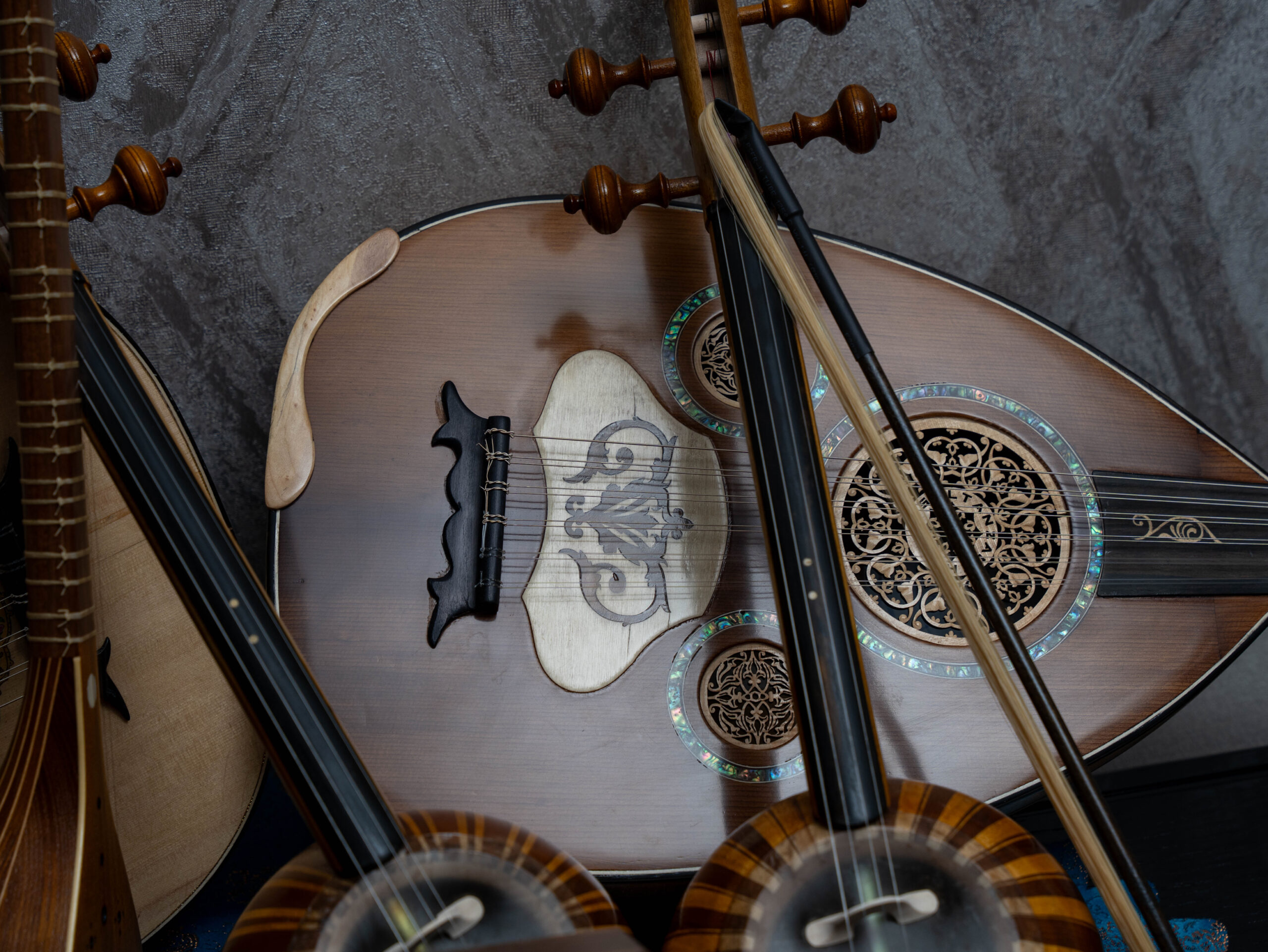
Introduction Music is the universal language of civilizations. From the earliest natural sounds to the most intricate melodies of today, musical instruments have played a crucial role in shaping cultures, rituals, and global artistry. Each instrument carries a story—its roots in history, the hands that crafted it, and the melodies it brings to life. At Art Gulf, we have curated a collection of unique, entirely( handmade )e (mastercrafted) musical instruments, preserving the legacy of civilizations while paving the way for the future of music.
This article explores different types of instruments, their historical significance, the oldest musical instruments in the world, and particularly the instruments rooted in Iran, Omán, Morocco, Egypt, China, India, and Italy. Finally, we discuss their value as both artistic and financial investments for collectors, musicians, and music scholars.
1.Main Categories of Musical Instruments:
Musical instruments are generally classified into four main categories:
1. String Instruments (Chordophones): Includes Tar, Setar, Oud, Kamancheh, Violin, Qanun, and Santur.
2. Percussion Instruments (Membranophones & Idiophones): Includes Tonbak, Daf, Tabla, and Bendir.
3. Wind Instruments (Aerophones): Includes Ney, Duduk, Sheng (China), Egyptian Nai, and Indian Shehnai.
4. Keyboard Instruments: Includes the Organ, Harpsichord, and Harmonium.
2. The Oldest Musical Instruments in the World:
1. Ancient Instruments and Their Origins
• Iran: Depictions of string instruments such as the Tar and Kamancheh have been discovered in ancient Persian paintings and seals from the Achaemenid and Parthian eras.
• Egypt: Ancient reliefs in Egyptian temples depict the Ney and Qanun, emphasizing their role in sacred and royal ceremonies.
• China: The Sheng, one of the oldest wind instruments, was crafted over 3,000 years ago.
• India: Instruments like the Sarod and Sitar are among the world’s oldest string instruments, still used in Indian classical music.
• Italy: Italy played a key role in the development of the Violin. Esteemed makers like Stradivarius in the 17th and 18th centuries crafted instruments that remain some of the most valuable in the world.
• Morocco & Oman: Various stringed and percussion instruments have deep connections to Berber and Arabic music traditions.
2. Instruments That Have Stood the Test of Time
• Oud: Originating from Mesopotamia, this versatile instrument inspired many string instruments across the world.
• Qanun: With a history of over 2,000 anos, this instrument is central to Middle Eastern, turco, and North African music.
• Kamancheh: A bowed string instrument integral to Persian and Central Asian music.
• Santur: With Persian origins, this hammered dulcimer has influenced music from India to Greece and Europe.
• Violin: Emerging from Italy, the violin has become a fundamental instrument in both Western and Eastern classical music.
3. Prominent Musical Instruments by Country
1. Iran
• Tar: Made from mulberry wood and lambskin, known for its deep and expressive tone.
• Setar: A delicate instrument used in Persian Sufi music.
• Kamancheh: A crucial bowed string instrument in Persian music.
• Santur: A trapezoidal hammered dulcimer with 72 strings, producing a mesmerizing sound.
• Tonbak: The principal goblet drum of Persian music, known for its intricate techniques.
2. Oman
• Oud: Crafted from high-quality woods like rosewood and walnut, producing a distinctive sound.
• Omani Daf: A frame drum used in traditional and ceremonial music.
3. Morocco
• Guembri: A plucked string instrument used in Gnawa music.
• Bendir: A large frame drum integral to Moroccan folk music.
4. Egypt
• Egyptian Ney: A reed flute that holds a significant place in Arabic classical music.
• Qanun: A key instrument in Arabic and Middle Eastern classical traditions.
5. China
• Sheng: One of the earliest known wind instruments, still played in traditional Chinese music.
• Guzheng: A zither-like instrument, similar to the Qanun but played with unique techniques. 6. India
• Sitar: A fundamental instrument in Hindustani classical music, known for its unique resonant sound.
• Tabla: A percussion instrument used for intricate rhythmic patterns.
7. Italy
• Violin: First developed in 16th-century Italy, the violin remains one of the most prestigious instruments in global classical music.
4. The Value of Handmade Musical Instruments:
Handmade and mastercrafted instruments not only have great artistic value but also serve as highly valuable investments over time. Factors Affecting the Value of an Instrument.
• Material and craftsmanship (e.g., walnut, rosewood, and mulberry for instruments like the Tar and Oud).
• Handmade quality and artisan skill (Master luthiers often leave a signature or mark on high-end instruments).
• Historical significance and rarity (Antique and limited-edition instruments have increased value).
• Sound quality and international standards (Certain instruments are crafted for professional performances, enhancing their market value).
5. Musical Instruments as a Cultural Investment For Collectors Handmade instruments not only have cultural and historical significance but also appreciate in value over time, making them worthy additions to private collections and museums.
For Musicians and Artists Owning a handmade instrument means possessing a unique tool that offers an unparalleled sound and personal connection to the music.
For Scholars and Enthusiasts Understanding the history and philosophy behind these instruments deepens one’s appreciation and knowledge of music. Conclusion: Music is a bridge that connects the past to the future. Every instrument is an ambassador of civilization, continuing its journey through the hands of today’s artisans and musicians. At Art- Gulf.com, we have gathered a collection of exceptional, handmade musical instruments that are not just historical treasures but also investments in the future of music.
In our sales section, each of these mastercrafted instruments is available with detailed information, valuation, and pricing.
Handicrafts
Handicrafts: From the Heart of Ancient Civilizations to the Investment of the Future Introduction:
A Timeless Legacy in Our Hands Handicrafts are more than just artistic creations—they are reflections of the soul and identity of great civilizations, from Iran, Egypt, India, and China to Oman and Morocco. These ancient arts serve as a bridge between the past and the future, each piece telling a unique story of culture, civilization, and creativity. In today’s world, where mass production dominates, handicrafts hold their ground, not only for their artistic value but also for their economic and investment potential.
The Origins of Handicrafts in Human History The first signs of handicrafts date back to the Paleolithic era, around 30,000 to 40,000 years ago, when early humans used bones, madeira, and stones for survival and artistic expression. However, the earliest documented artistic and handcrafted works belong to 10,000 to 12,000 years ago, when great civilizations like Sumer, Ancient Egypt, Persia, China, and India began creating remarkable and lasting artifacts.
The Oldest Handicraft Discoveries in the World:
1. Painted Pottery from Susa (Irán) – Around 8,000 years ago
2. Stone Seals from Mesopotamia – Over 7,000 years ago
3. Gold Jewelry and Gemstone Art from Ancient Egypt – 5,000 years ago
4. Chinese Silk Weaving – Over 4,500 years ago
5. Intricate Woven Fabrics from India – Over 4,000 years ago
6. Mosaic Pottery from Morocco and Oman – 3,000 years ago.
These discoveries highlight how handicrafts have always played a fundamental role in human civilization, serving not only practical purposes but also acting as cultural and artistic expressions of societies.
Handmade or a Living Art?
Hoxe, terms like Handmade or Handicraft are commonly used to describe artisan products, yet these items are much more than just manually crafted objects. They carry the history, cultura, and aesthetic philosophy of some of the greatest civilizations. Whether from Iran, Egypt, Morocco, Omán, India, or China, handicrafts reflect the artistic mastery and unique identity of their origins.
Why Handicrafts from Great Civilizations?
1. Authenticity and Unique Art: Handicrafts from civilizations such as Iran, Egypt, India, China, Omán, and Morocco are the result of thousands of years of craftsmanship, philosophy, and artistic excellence.
2. A Valuable Investment: Unlike mass-produced goods, handicrafts not only retain their value over time but often appreciate. Collectors and art investors recognize this market as both secure and promising.
3. The Uniqueness of Every Piece: Each handcrafted item is one-of-a-kind. Owning a miniature Susa pottery, an Indian woven textile, or a Moroccan rug means holding a tangible piece of history and heritage.
4. A Link to Civilizations: We are the ambassadors of the world’s ancient civilizations. Handicrafts serve as a universal language, connecting people through time and culture.
The Global Market and the Future of Handicrafts With the rising demand for sustainable and authentic art, handicrafts have attracted increasing attention from investors and collectors. While digital art and NFTs are on the rise, physical handicrafts remain irreplaceable, maintaining their strong position among galleries, coleccionistas, and art enthusiasts. Hoxe, purchasing handicrafts is not only an artistic choice but also a strategic financial investment.
Conclusion: A Bridge Between Art, Investment, and the Future We are witnessing a global return to authenticity. In a world that seeks deeper connections with history, art, and culture, handicrafts remain among the most valuable assets one can invest in. Whether you are a seasoned collector or an investor searching for a dynamic and appreciating market, handicrafts from the world’s greatest civilizations open the door to beauty, value, and timeless craftsmanship.
On our platform: Art-Gulf.com you will not only experience living art but also gain the opportunity to explore and invest in the eternal world of handicrafts.
Alfombra
Alfombra: A Unique Jewel from the Heart of History, for Your Future
A Masterpiece, An Investment, A Timeless Legacy We have come from the heart of ancient civilizations to shape your future. What lies before you is not just a carpet—it is thousands of years of art, cultura, and human civilization woven into every thread. Our carpets are not newly created; they have been centuries in the making.
Every knot is a continuation of a journey that began in the empires of antiquity, flourished under the Safavid dynasty, and has been passed down through generations of master artisans. Owning one of these carpets means becoming the custodian of a living history.
A Singular Piece of History, in Your Hands In a world where rarity defines true value, each of these carpets is one of a kind. No two pieces are alike, and each carries a unique story within its intricate patterns. Once sold, they will never be available again. These are not just carpets—they are ambassadors of civilization.
They have journeyed through the courts of Persian kings, adorned palaces, and stood as testaments to the brilliance of Iranian craftsmanship. Now, they stand before you, offering the chance to own an irreplaceable masterpiece. Value That Increases Over Time What makes a Persian carpet a priceless asset?
• A handcrafted work of art, not a mass-produced item.
• A one-of-a-kind masterpiece, not a replicated design.
• An investment that appreciates over time, not a fleeting purchase.
Just as paintings by Da Vinci and Rembrandt gain value with time, authentic Persian carpets are treasures that only grow more valuable with each passing year. An Exclusive Club, for Those Who Understand True Value This collection is reserved for individuals who recognize the depth of art, heritage, and timeless worth. You are not just a buyer—you are a guardian of cultural legacy. Your Last Chance to Own a Historic Masterpiece With each passing day, another one of these masterpieces leaves our collection forever. If you are ready to own a piece of history and secure an asset of lasting value, do not let this moment pass.
In Art-Gulf.com ,This is not just a purchase—this is a choice for eternity. We have come from the heart of ancient civilizations to shape your future.
I’ve been Curaturing since 1999
We invite artists, leading galleries, renowned collectors, and investors from around the world to join us on this unique platform—where art reaches its true value.


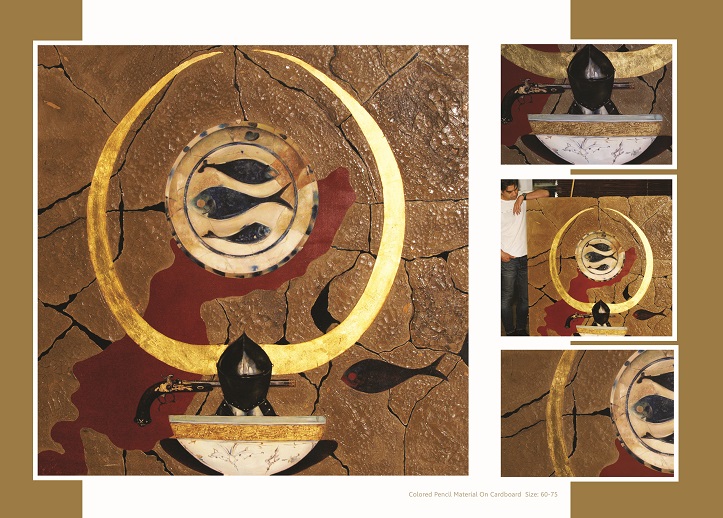
Mestre Ahmad Najafi | Pintor & Artista conceptual: de Teherán á escena artística global. Ahmad Najafi é un artista iraniano visionario cuxa viaxe na pintura e o debuxo comezou na súa adolescencia en Teherán.. Cunha paixón que perdura durante décadas, estableceu unha voz única en varios estilos artísticos, incluíndo conceptual, abstracto, surrealista, e expresións realistas. As súas obras de arte están elaboradas utilizando unha gran variedade de técnicas e materiais, desde pintura ao óleo, pasteis, lapis de cores, carbón vexetal, gouache, e pan de ouro, aos lenzos, madeira, e tecidos tradicionais iranianos. Cada peza reflicte un núcleo emocional profundo, unha conexión poética entre a experiencia interior e a forma exterior. Dende 1999, O mestre Najafi estivo activamente ensinando pintura no seu estudo privado, onde formou e inspirou a unha nova xeración de amantes da arte. Con moito orgullo, introduciu a numerosos estudantes no mundo das belas artes, non só en Irán senón tamén a nivel mundial. A través de clases en liña e virtuais, traballou con estudantes de Australia, Canadá, o Reino Unido, os Estados Unidos, Turquía, os Emiratos Árabes Unidos, Omán, Kuwait, e moitos outros países. Tamén dirixiu obradoiros presenciais, incluíndo sesións para membros de familias aristocráticas tradicionais en partes do mundo árabe. As pinturas de Najafi foron expostas e adquiridas por coleccionistas e galerías de todo o mundo. Ata a data, centos das súas obras orixinais, cada unha coa súa propia narrativa e espírito, foron compradas ou encargadas internacionalmente, e exhibido en galerías privadas de países como os Emiratos Árabes Unidos, Omán, Qatar, Kuwait, o Reino Unido, EUA, China, Xapón, Australia, Turquía, Rusia, Italia, España, e máis aló. As súas pezas son admiradas non só pola súa beleza estética, senón tamén como investimentos coleccionables que aprecian os entusiastas da arte e os coleccionistas profesionais.. Vimos do corazón das antigas civilizacións ao teu futuro e o mestre Ahmad Najafi é un dos embaixadores máis inspiradores desta viaxe..

“Neste mundo fugaz, ningunha propiedade é permanente; a oportunidade de gozar destes tesouros únicos pasou por nós, e agora tócache posuír, ver, tocar, e compartir estas valiosas obras de arte coas xeracións futuras”.

Mestre Rasoulian | Mestre de incrustacións de madeira (Moarraq) e Relief Carving: desde raíces atemporais ata obras mestras globais Mestre Rasoulian, nacido en Irán, procede dunha familia profundamente arraigada nas tradicións da arte. Criado nunha casa onde as alfombras tecidas a man eran o patrimonio da familia e as melodías da música e as voces tradicionais enchían o aire., a súa paixón pola arte fomentouse dende cedo. Familiarizouse intimamente con todas as etapas da produción de alfombras feitas a man e desenvolveu unha habilidade excepcional nos distintos aspectos desta artesanía.. Esta profunda conexión coas artes tradicionais levouno a cursar unha educación formal no campo da artesanía. En 2005, licenciouse nunha escola técnica de arte e despois licenciouse en Deseño de alfombras, afondando tanto na súa comprensión académica como artística. A súa exposición á complexa xeometría dos patróns de alfombras e á estética da pintura clásica atraeuno naturalmente cara ao mundo da incrustación de madeira. (Moarraq) e talla en relevo (Monabbat). Desde entón, O mestre Rasoulian creou centos de obras notables, que van desde paneis con incrustacións de madeira e mobles esculpidos ata luxosas mesas ornamentais.. Cada unha das súas pezas é unha fusión única de tradición, expresión persoal, e técnica refinada. As súas obras mestras foron exportadas con orgullo a países como os Emiratos Árabes Unidos, Kuwait, Qatar, o Reino Unido, os Estados Unidos, e moitos outros, e atoparon casas en galerías privadas e coleccións de prestixio en todo o mundo. nA súa arte serve como ponte entre un pasado glorioso e un futuro creativo no arte global: obras que non só dan vida á madeira senón que expresan poéticamente a beleza., harmonía, e o espírito perdurable da humanidade en todas as civilizacións e culturas. Vimos do corazón das antigas civilizacións para moldear o teu futuro, e o mestre Rasoulian é unha das voces duradeiras desta viaxe atemporal..

Mestre Hossein Bishe'i | Violíns Que Falan, Non só son
Nacido en Teherán, unha cidade onde o son vive no mesmo tecido da vida, o mestre Hossein Bishe'i dedicouse durante tres décadas á procura da forma musical pura.. Comezando a súa viaxe en 1986 coa elaboración do santur, despois explorou o alcatrán, e xa que 2003, dedicou plenamente o seu oficio ao violín, un instrumento occidental que renace nas súas mans como obxecto tanto de son como de arte.. Cada un dos seus instrumentos é totalmente artesanal. Desde madeiras coidadosamente seleccionadas ata detalles acústicamente refinados, Bishe'i crea violíns feitos por mestres, pezas que rivalizan coa calidade que se atopa en só un puñado de talleres en todo o mundo.. As súas obras traspasaron fronteiras. Os violíns de Hossein Bishe'i chegaron a músicos e coleccionistas máis esixentes dos Emiratos Árabes Unidos., Qatar, Kuwait, España, Italia, o Reino Unido, Canadá, os Estados Unidos, e máis aló. Hoxe, os seus instrumentos tocan nos cinco continentes, cada un levando unha voz única: unha sinatura audible do artista que a deu forma. Para o mestre Bishe'i, o violín non é só unha ferramenta, senón un vaso de espírito. O seu oficio é un diálogo coa madeira, unha transformación de árbores que antes vivían en recipientes de son eterno. Estes non son só instrumentos. Son obras de arte. Son voces. E cada vez que se toca un dos seus violíns, non fai eco só dunha nota, senón unha promesa: "Vimos do corazón das civilizacións antigas ao teu futuro".
vémonos pronto

Yashar Malfouzi Chámome Yashar Malfouzi (1978) e nacín en Tabriz, Irán, nunha familia que se dedicaba plenamente ao negocio da produción e distribución de alfombras e alfombras feitas a man, para 4 xeracións. Estaba moi interesado na arte das alfombras desde o comezo da miña infancia, e á idade de 12, Conseguín o meu status de mestre en tecido de alfombras; e aprendeu todo o tecido, procesos de reparación e incluso de tinguidura. Á idade de 15, Comecei a facer patróns en relevo e 3D en alfombras e alfombras, utilizando técnicas autodidactas. Para seguir avanzando na miña aprendizaxe, coñecementos e técnicas, Entrei na universidade no ano 2011, e puido graduarse con honores, en só 6 semestres, da Universidade de Arte, con grao de Deseño de Alfombras. Despois, continuar a miña educación e enriquecer os meus coñecementos, I started a master's degree in Arts History, que rematei con honras e recibín o Grao de Arte do Estado. As miñas obras tamén ocuparon o primeiro lugar: Festival de Creatividade e Innovación do traballo islámico, Festival Rashidi, Top Festival de Alfombras de Tabriz (dous anos seguidos). No último 25 anos, Teño comercializado 30,000 alfombras e moquetas e dende o ano 2011, Comecei a enviar as miñas alfombras artísticas únicas a varias partes do mundo. Debo sinalar que os meus traballos están totalmente feitos a man de forma tradicional, e cada obra ten o seu propio significado único, que foi incrustado no patrón en relevo das alfombras. Estas alfombras teñen un propósito decorativo e están montadas na parede. Estas alfombras en relevo con patrón de superficie 3D, foron enviados a EEUU, Canadá, Suíza, Xapón, Qatar, Kuwait, os Emiratos Árabes Unidos, Alemaña e varios outros países.