




Musical Intrusmants
Musical Instruments: A Bridge from the Heart of History to the Future of Art
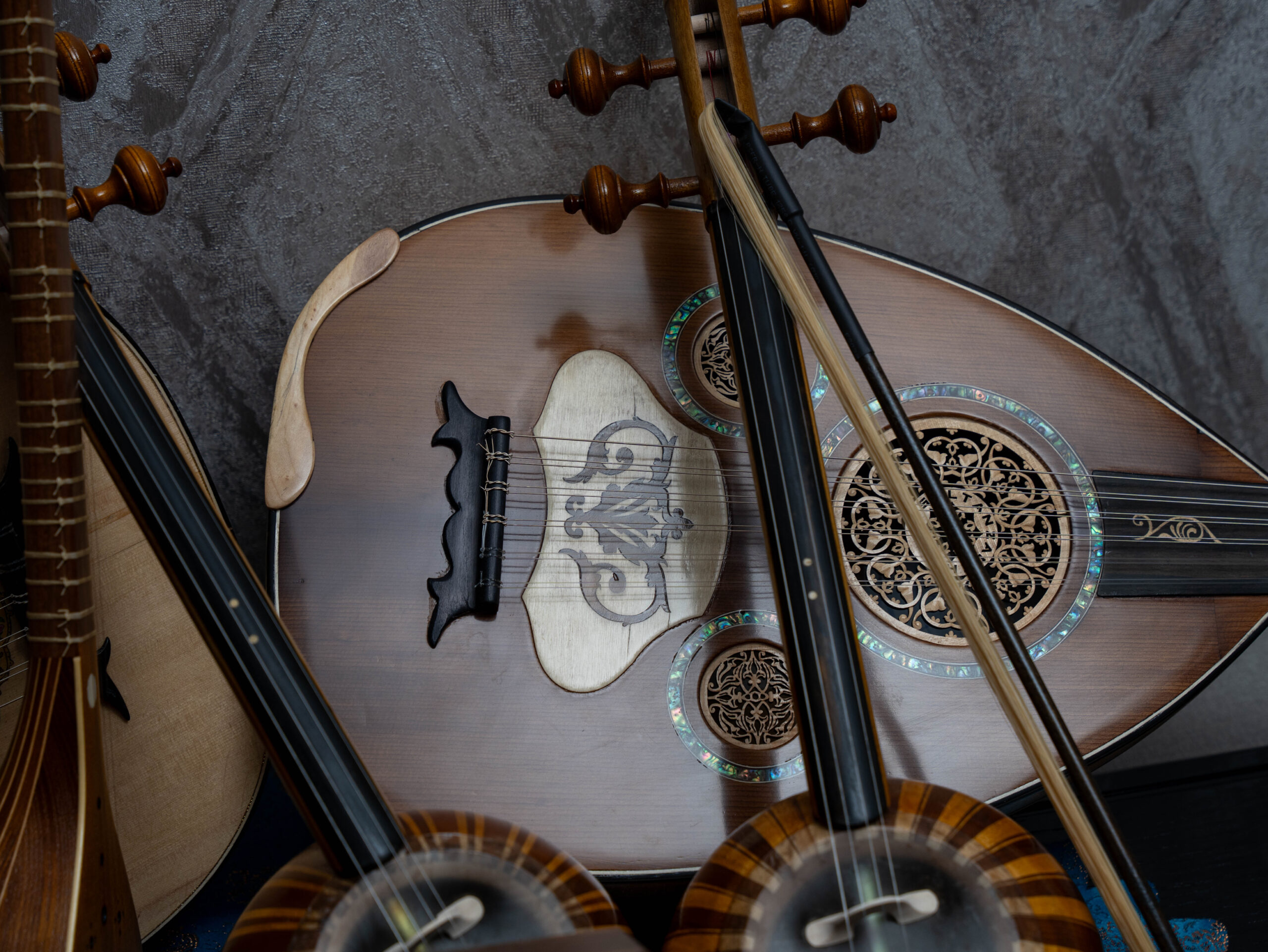
Introduction Music is the universal language of civilizations. From the earliest natural sounds to the most intricate melodies of today, musical instruments have played a crucial role in shaping cultures, rituals, and global artistry. Each instrument carries a story—its roots in history, the hands that crafted it, and the melodies it brings to life. At Art Gulf, we have curated a collection of unique, entirely( handmade )og (mastercrafted) musical instruments, preserving the legacy of civilizations while paving the way for the future of music.
This article explores different types of instruments, their historical significance, the oldest musical instruments in the world, and particularly the instruments rooted in Iran, Oman, Morocco, Egypt, Kina, India, and Italy. Finally, we discuss their value as both artistic and financial investments for collectors, musicians, and music scholars.
1.Main Categories of Musical Instruments:
Musical instruments are generally classified into four main categories:
1. String Instruments (Chordophones): Includes Tar, Setar, Oud, Kamancheh, Violin, Qanun, and Santur.
2. Percussion Instruments (Membranophones & Idiophones): Includes Tonbak, Daf, Tabla, and Bendir.
3. Wind Instruments (Aerophones): Includes Ney, Duduk, Sheng (Kina), Egyptian Nai, and Indian Shehnai.
4. Keyboard Instruments: Includes the Organ, Harpsichord, and Harmonium.
2. The Oldest Musical Instruments in the World:
1. Ancient Instruments and Their Origins
• Iran: Depictions of string instruments such as the Tar and Kamancheh have been discovered in ancient Persian paintings and seals from the Achaemenid and Parthian eras.
• Egypt: Ancient reliefs in Egyptian temples depict the Ney and Qanun, emphasizing their role in sacred and royal ceremonies.
• China: The Sheng, one of the oldest wind instruments, was crafted over 3,000 years ago.
• India: Instruments like the Sarod and Sitar are among the world’s oldest string instruments, still used in Indian classical music.
• Italy: Italy played a key role in the development of the Violin. Esteemed makers like Stradivarius in the 17th and 18th centuries crafted instruments that remain some of the most valuable in the world.
• Morocco & Oman: Various stringed and percussion instruments have deep connections to Berber and Arabic music traditions.
2. Instruments That Have Stood the Test of Time
• Oud: Originating from Mesopotamia, this versatile instrument inspired many string instruments across the world.
• Qanun: With a history of over 2,000 år, this instrument is central to Middle Eastern, tyrkisk, and North African music.
• Kamancheh: A bowed string instrument integral to Persian and Central Asian music.
• Santur: With Persian origins, this hammered dulcimer has influenced music from India to Greece and Europe.
• Violin: Emerging from Italy, the violin has become a fundamental instrument in both Western and Eastern classical music.
3. Prominent Musical Instruments by Country
1. Iran
• Tar: Made from mulberry wood and lambskin, known for its deep and expressive tone.
• Setar: A delicate instrument used in Persian Sufi music.
• Kamancheh: A crucial bowed string instrument in Persian music.
• Santur: A trapezoidal hammered dulcimer with 72 strings, producing a mesmerizing sound.
• Tonbak: The principal goblet drum of Persian music, known for its intricate techniques.
2. Oman
• Oud: Crafted from high-quality woods like rosewood and walnut, producing a distinctive sound.
• Omani Daf: A frame drum used in traditional and ceremonial music.
3. Morocco
• Guembri: A plucked string instrument used in Gnawa music.
• Bendir: A large frame drum integral to Moroccan folk music.
4. Egypt
• Egyptian Ney: A reed flute that holds a significant place in Arabic classical music.
• Qanun: A key instrument in Arabic and Middle Eastern classical traditions.
5. China
• Sheng: One of the earliest known wind instruments, still played in traditional Chinese music.
• Guzheng: A zither-like instrument, similar to the Qanun but played with unique techniques. 6. India
• Sitar: A fundamental instrument in Hindustani classical music, known for its unique resonant sound.
• Tabla: A percussion instrument used for intricate rhythmic patterns.
7. Italy
• Violin: First developed in 16th-century Italy, the violin remains one of the most prestigious instruments in global classical music.
4. The Value of Handmade Musical Instruments:
Handmade and mastercrafted instruments not only have great artistic value but also serve as highly valuable investments over time. Factors Affecting the Value of an Instrument.
• Material and craftsmanship (e.g., walnut, rosewood, and mulberry for instruments like the Tar and Oud).
• Handmade quality and artisan skill (Master luthiers often leave a signature or mark on high-end instruments).
• Historical significance and rarity (Antique and limited-edition instruments have increased value).
• Sound quality and international standards (Certain instruments are crafted for professional performances, enhancing their market value).
5. Musical Instruments as a Cultural Investment For Collectors Handmade instruments not only have cultural and historical significance but also appreciate in value over time, making them worthy additions to private collections and museums.
For Musicians and Artists Owning a handmade instrument means possessing a unique tool that offers an unparalleled sound and personal connection to the music.
For Scholars and Enthusiasts Understanding the history and philosophy behind these instruments deepens one’s appreciation and knowledge of music. Conclusion: Music is a bridge that connects the past to the future. Every instrument is an ambassador of civilization, continuing its journey through the hands of today’s artisans and musicians. At Art- Gulf.com, we have gathered a collection of exceptional, handmade musical instruments that are not just historical treasures but also investments in the future of music.
In our sales section, each of these mastercrafted instruments is available with detailed information, valuation, and pricing.
Handicrafts
Handicrafts: From the Heart of Ancient Civilizations to the Investment of the Future Introduction:
A Timeless Legacy in Our Hands Handicrafts are more than just artistic creations—they are reflections of the soul and identity of great civilizations, from Iran, Egypt, India, and China to Oman and Morocco. These ancient arts serve as a bridge between the past and the future, each piece telling a unique story of culture, civilization, and creativity. In today’s world, where mass production dominates, handicrafts hold their ground, not only for their artistic value but also for their economic and investment potential.
The Origins of Handicrafts in Human History The first signs of handicrafts date back to the Paleolithic era, around 30,000 to 40,000 years ago, when early humans used bones, træ, and stones for survival and artistic expression. However, the earliest documented artistic and handcrafted works belong to 10,000 to 12,000 years ago, when great civilizations like Sumer, Ancient Egypt, Persia, Kina, and India began creating remarkable and lasting artifacts.
The Oldest Handicraft Discoveries in the World:
1. Painted Pottery from Susa (Iran) – Around 8,000 years ago
2. Stone Seals from Mesopotamia – Over 7,000 years ago
3. Gold Jewelry and Gemstone Art from Ancient Egypt – 5,000 years ago
4. Chinese Silk Weaving – Over 4,500 years ago
5. Intricate Woven Fabrics from India – Over 4,000 years ago
6. Mosaic Pottery from Morocco and Oman – 3,000 years ago.
These discoveries highlight how handicrafts have always played a fundamental role in human civilization, serving not only practical purposes but also acting as cultural and artistic expressions of societies.
Handmade or a Living Art?
I dag, terms like Handmade or Handicraft are commonly used to describe artisan products, yet these items are much more than just manually crafted objects. They carry the history, culture, and aesthetic philosophy of some of the greatest civilizations. Whether from Iran, Egypt, Morocco, Oman, India, or China, handicrafts reflect the artistic mastery and unique identity of their origins.
Why Handicrafts from Great Civilizations?
1. Authenticity and Unique Art: Handicrafts from civilizations such as Iran, Egypt, India, Kina, Oman, and Morocco are the result of thousands of years of craftsmanship, filosofi, and artistic excellence.
2. A Valuable Investment: Unlike mass-produced goods, handicrafts not only retain their value over time but often appreciate. Collectors and art investors recognize this market as both secure and promising.
3. The Uniqueness of Every Piece: Each handcrafted item is one-of-a-kind. Owning a miniature Susa pottery, an Indian woven textile, or a Moroccan rug means holding a tangible piece of history and heritage.
4. A Link to Civilizations: We are the ambassadors of the world’s ancient civilizations. Handicrafts serve as a universal language, connecting people through time and culture.
The Global Market and the Future of Handicrafts With the rising demand for sustainable and authentic art, handicrafts have attracted increasing attention from investors and collectors. While digital art and NFTs are on the rise, physical handicrafts remain irreplaceable, maintaining their strong position among galleries, samlere, and art enthusiasts. I dag, purchasing handicrafts is not only an artistic choice but also a strategic financial investment.
Conclusion: A Bridge Between Art, Investment, and the Future We are witnessing a global return to authenticity. In a world that seeks deeper connections with history, art, and culture, handicrafts remain among the most valuable assets one can invest in. Whether you are a seasoned collector or an investor searching for a dynamic and appreciating market, handicrafts from the world’s greatest civilizations open the door to beauty, value, and timeless craftsmanship.
On our platform: Art-Gulf.com you will not only experience living art but also gain the opportunity to explore and invest in the eternal world of handicrafts.
Tæppe
Tæppe: A Unique Jewel from the Heart of History, for Your Future
A Masterpiece, An Investment, A Timeless Legacy We have come from the heart of ancient civilizations to shape your future. What lies before you is not just a carpet—it is thousands of years of art, culture, and human civilization woven into every thread. Our carpets are not newly created; they have been centuries in the making.
Every knot is a continuation of a journey that began in the empires of antiquity, flourished under the Safavid dynasty, and has been passed down through generations of master artisans. Owning one of these carpets means becoming the custodian of a living history.
A Singular Piece of History, in Your Hands In a world where rarity defines true value, each of these carpets is one of a kind. No two pieces are alike, and each carries a unique story within its intricate patterns. Once sold, they will never be available again. These are not just carpets—they are ambassadors of civilization.
They have journeyed through the courts of Persian kings, adorned palaces, and stood as testaments to the brilliance of Iranian craftsmanship. Now, they stand before you, offering the chance to own an irreplaceable masterpiece. Value That Increases Over Time What makes a Persian carpet a priceless asset?
• A handcrafted work of art, not a mass-produced item.
• A one-of-a-kind masterpiece, not a replicated design.
• An investment that appreciates over time, not a fleeting purchase.
Just as paintings by Da Vinci and Rembrandt gain value with time, authentic Persian carpets are treasures that only grow more valuable with each passing year. An Exclusive Club, for Those Who Understand True Value This collection is reserved for individuals who recognize the depth of art, heritage, and timeless worth. You are not just a buyer—you are a guardian of cultural legacy. Your Last Chance to Own a Historic Masterpiece With each passing day, another one of these masterpieces leaves our collection forever. If you are ready to own a piece of history and secure an asset of lasting value, do not let this moment pass.
In Art-Gulf.com ,This is not just a purchase—this is a choice for eternity. We have come from the heart of ancient civilizations to shape your future.
I’ve been Curaturing since 1999
We invite artists, leading galleries, renowned collectors, and investors from around the world to join us on this unique platform—where art reaches its true value.


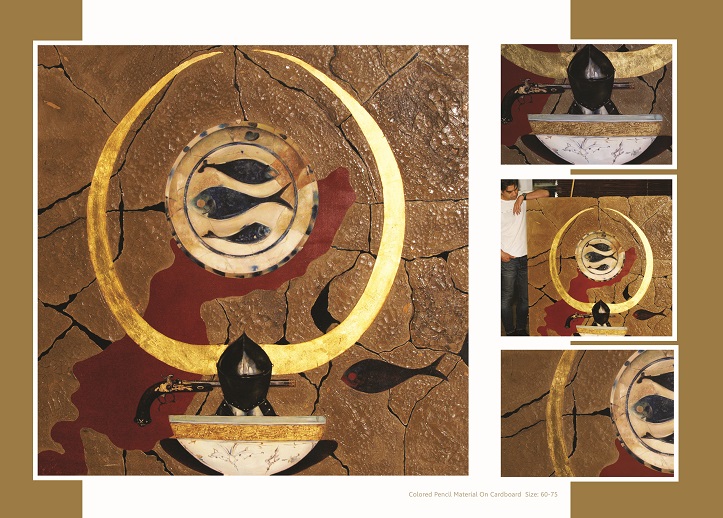
Mester Ahmad Najafi | Maler & Konceptuel kunstner – fra Teheran til den globale kunstscene .Ahmad Najafi er en visionær iransk kunstner, hvis rejse inden for maleri og tegning begyndte i hans teenageår i Teheran. Med en passion, der har bestået i årtier, han har etableret en unik stemme på tværs af forskellige kunstneriske stilarter, herunder konceptuelle, abstrakt, surrealistisk, og realistiske udtryk. Hans kunstværker er udformet ved hjælp af en bred vifte af teknikker og materialer - lige fra oliemaling, pasteller, farveblyanter, trækul, gouache, og bladguld, til lærreder, træ, og traditionelle iranske stoffer. Hvert stykke afspejler en dyb følelsesmæssig kerne, en poetisk sammenhæng mellem indre erfaring og ydre form. Siden 1999, Mester Najafi har aktivt undervist i maleri på sit private atelier, hvor han har trænet og inspireret en ny generation af kunstelskere. Med stor stolthed, han har introduceret adskillige studerende til kunstens verden - ikke kun i Iran, men også globalt. Gennem online og virtuelle klasser, han har arbejdet med studerende fra Australien, Canada, Det Forenede Kongerige, USA, Kalkun, de Forenede Arabiske Emirater, Oman, Kuwait, og mange andre lande. Han har også ledet personlige workshops, herunder sessioner for medlemmer af traditionelle aristokratiske familier i dele af den arabiske verden. Najafis malerier er blevet udstillet og erhvervet af samlere og gallerier over hele kloden. Til dato, hundredvis af hans originale værker - hver med sin egen fortælling og ånd - er blevet købt eller bestilt internationalt, og vises i private gallerier i lande som UAE, Oman, Qatar, Kuwait, Storbritannien, USA, Kina, Japan, Australien, Kalkun, Rusland, Italien, Spanien, og videre. Hans værker beundres ikke kun for deres æstetiske skønhed, men også som samleobjekter, der værdsættes af både kunstentusiaster og professionelle samlere. Vi er kommet fra hjertet af ældgamle civilisationer ind i din fremtid - og Mester Ahmad Najafi er en af de mest inspirerende ambassadører på denne rejse.

"I denne flygtige verden, intet ejerskab er permanent; muligheden for at nyde disse unikke skatte er gået igennem os, og nu er det din tur til at besidde, se, røre, og dele disse værdifulde kunstværker med fremtidige generationer."

Mester Rasoulian | Master of Wood Inlay (Moarraq) og Relief Carving – Fra tidløse rødder til globale mesterværker Master Rasoulian, født i Iran, kommer fra en familie, der er dybt forankret i kunstens traditioner. Opvokset i en husstand, hvor håndvævede tæpper var familiens arv, og melodierne fra traditionel musik og vokal fyldte luften, hans passion for kunst blev næret fra en tidlig alder. Han blev fortroligt med alle stadier af håndlavet tæppeproduktion og udviklede enestående færdigheder i de forskellige aspekter af dette håndværk. Denne dybe forbindelse til traditionel kunst fik ham til at forfølge formel uddannelse inden for kunsthåndværk. I 2005, han dimitterede fra en teknisk kunstskole og fik senere en bachelorgrad i tæppedesign, uddybe både hans akademiske og kunstneriske forståelse. Hans eksponering for den komplekse geometri af tæppemønstre og klassisk maleri-æstetik trak ham naturligt mod en verden af træindlæg (Moarraq) og reliefudskæring (Monabbat). Siden da, Mester Rasoulian har skabt hundredvis af bemærkelsesværdige værker - lige fra træindlægspaneler og indviklet udskårne møbler til luksuriøse dekorative borde. Hvert af hans værker er en unik fusion af tradition, personligt udtryk, og raffineret teknik. Hans mesterværker er stolt blevet eksporteret til lande, herunder De Forenede Arabiske Emirater, Kuwait, Qatar, Det Forenede Kongerige, USA, og mange andre, og har fundet hjem i private gallerier og prestigefyldte samlinger rundt om i verden. nHans kunst fungerer som en bro mellem en glorværdig fortid og en kreativ fremtid i det globale kunstnerskab - værker, der ikke kun puster liv i træ, men poetisk udtrykker skønhed, harmoni, og menneskehedens varige ånd på tværs af civilisationer og kulturer. Vi er kommet fra hjertet af gamle civilisationer for at forme din fremtid - og Mester Rasoulian er en af de varige stemmer på denne tidløse rejse.

Mester Hossein Bishe'i | Violiner der taler, Ikke kun lyd
Født i Teheran - en by, hvor lyden lever i selve livets struktur - har Mester Hossein Bishe'i viet over tre årtier til stræben efter ren musikalsk form. Begynder sin rejse ind 1986 med udformningen af santuren, han udforskede senere tjæren, og siden 2003, han har fuldt ud dedikeret sit håndværk til violinen - et vestligt instrument genfødt i hans hænder som et objekt for både lyd og kunst. Hvert af hans instrumenter er helt håndlavede. Fra nøje udvalgte træsorter til akustisk raffinerede detaljer, Bishe'i skaber mesterbyggede violiner - stykker, der konkurrerer med den kvalitet, der kun findes i en håndfuld workshops verden over. Hans værker har overskredet grænser. Violiner af Hossein Bishe'i har nået kræsne musikere og samlere i De Forenede Arabiske Emirater, Qatar, Kuwait, Spanien, Italien, Det Forenede Kongerige, Canada, USA, og videre. I dag, hans instrumenter spilles på tværs af fem kontinenter, hver bærer en unik stemme - en hørbar signatur af kunstneren, der formede den. For Mester Bishe'i, violinen er ikke kun et redskab, men et kar af ånd. Hans håndværk er en dialog med træ - en forvandling af engang levende træer til kar af evig lyd. Det er ikke kun instrumenter. De er kunstværker. De er stemmer. Og hver gang der spilles på en af hans violiner, det genlyder ikke bare en tone, men et løfte: "Vi er kommet fra hjertet af gamle civilisationer til din fremtid."
vi ses snart

Yashar Malfouzi Mit navn er Yashar Malfouzi (1978) og jeg blev født i Tabriz, Iran, ind i en familie, der var fuldt engageret i produktion og distribution af håndlavede tæpper, for 4 generationer. Jeg var meget interesseret i tæppekunst helt fra starten af min barndom, og i en alder af 12, Jeg fik min mesterstatus i tæppevævning; og lærte al vævningen, reparation og endda farvningsprocesser. I en alder af 15, Jeg begyndte at lave prægede og 3D-mønstre på tæpper og tæpper, ved hjælp af selvlærte teknikker. For yderligere at fremme min læring, viden og teknikker, Jeg kom ind på universitetet i år 2011, og kunne dimittere med udmærkelse, kun i 6 semestre, fra kunstuniversitetet, med Carpet Designing Art grad. Bagefter, at fortsætte min uddannelse og for at berige min viden, I started a master's degree in Arts History, som jeg afsluttede med æresbevisninger, og jeg modtog Statens Art Degree. Mine værker har også fået førstepladsen: Festival for kreativitet og innovation af islamisk arbejde, Rashidi Festival, Toptæppefestival i Tabriz (to år i træk). I den sidste 25 år, Jeg har kommercialiseret 30,000 tæpper og tæpper og siden året 2011, Jeg er begyndt at indsende mine unikke kunstneriske tæpper til forskellige dele af verden. Jeg skal påpege, at mine værker er helt håndlavede på traditionel vis, og hvert værk har sin egen unikke betydning, som er blevet indlejret på tæppernes prægede mønster. Disse tæpper har et dekorativt formål og er monteret på væggen. Disse prægede tæpper med 3D overflademønster, er blevet sendt til USA, Canada, Schweiz, Japan, Qatar, Kuwait, de Forenede Arabiske Emirater, Tyskland og flere andre lande.