





Musical Intrusmants
Musical Instruments: A Bridge from the Heart of History to the Future of Art
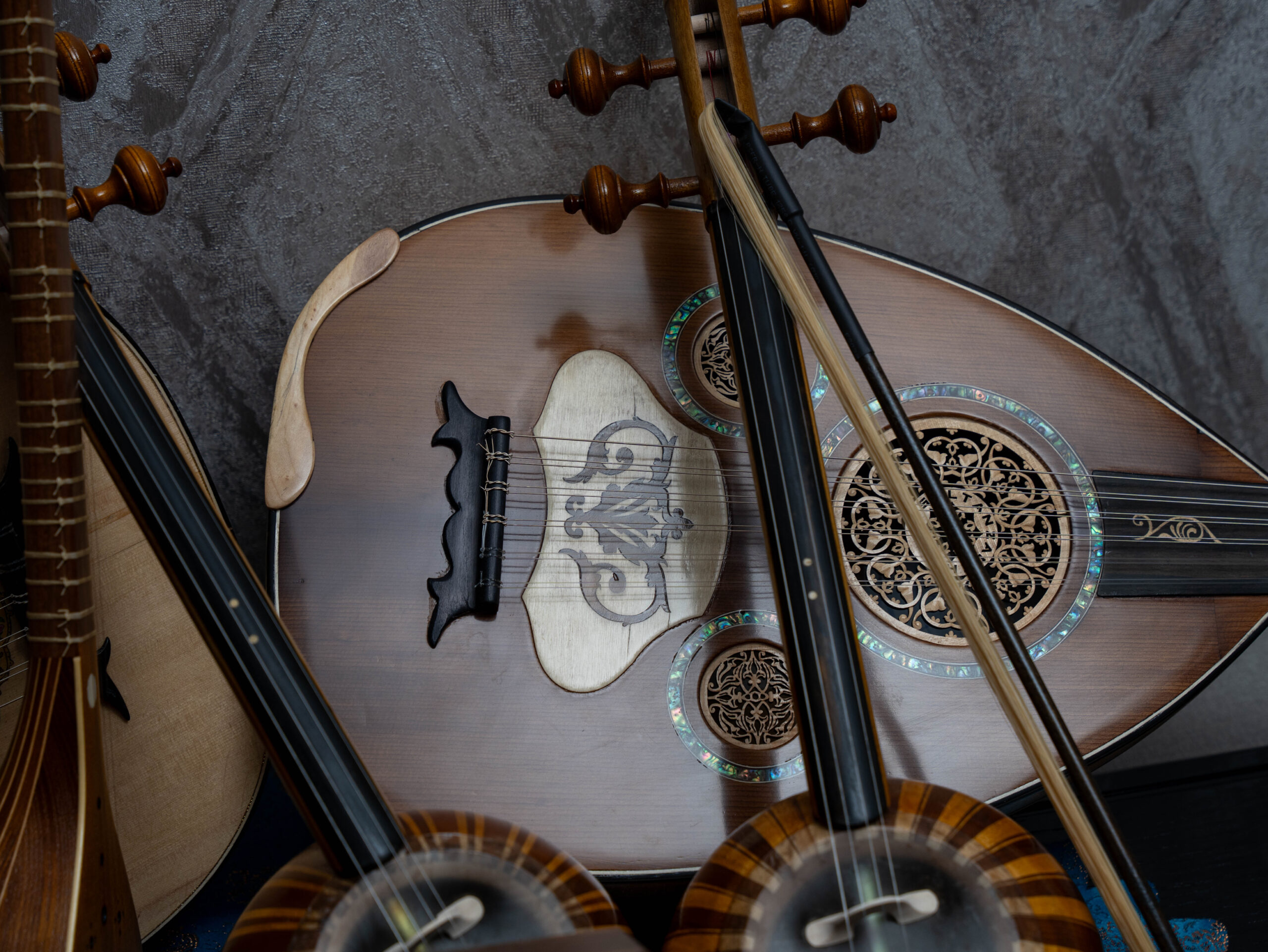
Introduction Music is the universal language of civilizations. From the earliest natural sounds to the most intricate melodies of today, musical instruments have played a crucial role in shaping cultures, rituals, and global artistry. Each instrument carries a story—its roots in history, the hands that crafted it, and the melodies it brings to life. At Art Gulf, we have curated a collection of unique, entirely( handmade )and (mastercrafted) musical instruments, preserving the legacy of civilizations while paving the way for the future of music.
This article explores different types of instruments, their historical significance, the oldest musical instruments in the world, and particularly the instruments rooted in Iran, Omán, Morocco, Egypt, Čína, India, and Italy. Finally, we discuss their value as both artistic and financial investments for collectors, musicians, and music scholars.
1.Main Categories of Musical Instruments:
Musical instruments are generally classified into four main categories:
1. String Instruments (Chordophones): Includes Tar, Setar, Oud, Kamancheh, Violin, Qanun, and Santur.
2. Percussion Instruments (Membranophones & Idiophones): Includes Tonbak, Daf, Tabla, and Bendir.
3. Wind Instruments (Aerophones): Includes Ney, Duduk, Sheng (Čína), Egyptian Nai, and Indian Shehnai.
4. Keyboard Instruments: Includes the Organ, Harpsichord, and Harmonium.
2. The Oldest Musical Instruments in the World:
1. Ancient Instruments and Their Origins
• Iran: Depictions of string instruments such as the Tar and Kamancheh have been discovered in ancient Persian paintings and seals from the Achaemenid and Parthian eras.
• Egypt: Ancient reliefs in Egyptian temples depict the Ney and Qanun, emphasizing their role in sacred and royal ceremonies.
• China: The Sheng, one of the oldest wind instruments, was crafted over 3,000 years ago.
• India: Instruments like the Sarod and Sitar are among the world’s oldest string instruments, still used in Indian classical music.
• Italy: Italy played a key role in the development of the Violin. Esteemed makers like Stradivarius in the 17th and 18th centuries crafted instruments that remain some of the most valuable in the world.
• Morocco & Oman: Various stringed and percussion instruments have deep connections to Berber and Arabic music traditions.
2. Instruments That Have Stood the Test of Time
• Oud: Originating from Mesopotamia, this versatile instrument inspired many string instruments across the world.
• Qanun: With a history of over 2,000 let, this instrument is central to Middle Eastern, Turkish, and North African music.
• Kamancheh: A bowed string instrument integral to Persian and Central Asian music.
• Santur: With Persian origins, this hammered dulcimer has influenced music from India to Greece and Europe.
• Violin: Emerging from Italy, the violin has become a fundamental instrument in both Western and Eastern classical music.
3. Prominent Musical Instruments by Country
1. Iran
• Tar: Made from mulberry wood and lambskin, known for its deep and expressive tone.
• Setar: A delicate instrument used in Persian Sufi music.
• Kamancheh: A crucial bowed string instrument in Persian music.
• Santur: A trapezoidal hammered dulcimer with 72 strings, producing a mesmerizing sound.
• Tonbak: The principal goblet drum of Persian music, known for its intricate techniques.
2. Oman
• Oud: Crafted from high-quality woods like rosewood and walnut, producing a distinctive sound.
• Omani Daf: A frame drum used in traditional and ceremonial music.
3. Morocco
• Guembri: A plucked string instrument used in Gnawa music.
• Bendir: A large frame drum integral to Moroccan folk music.
4. Egypt
• Egyptian Ney: A reed flute that holds a significant place in Arabic classical music.
• Qanun: A key instrument in Arabic and Middle Eastern classical traditions.
5. China
• Sheng: One of the earliest known wind instruments, still played in traditional Chinese music.
• Guzheng: A zither-like instrument, similar to the Qanun but played with unique techniques. 6. India
• Sitar: A fundamental instrument in Hindustani classical music, known for its unique resonant sound.
• Tabla: A percussion instrument used for intricate rhythmic patterns.
7. Italy
• Violin: First developed in 16th-century Italy, the violin remains one of the most prestigious instruments in global classical music.
4. The Value of Handmade Musical Instruments:
Handmade and mastercrafted instruments not only have great artistic value but also serve as highly valuable investments over time. Factors Affecting the Value of an Instrument.
• Material and craftsmanship (e.g., walnut, rosewood, and mulberry for instruments like the Tar and Oud).
• Handmade quality and artisan skill (Master luthiers often leave a signature or mark on high-end instruments).
• Historical significance and rarity (Antique and limited-edition instruments have increased value).
• Sound quality and international standards (Certain instruments are crafted for professional performances, enhancing their market value).
5. Musical Instruments as a Cultural Investment For Collectors Handmade instruments not only have cultural and historical significance but also appreciate in value over time, making them worthy additions to private collections and museums.
For Musicians and Artists Owning a handmade instrument means possessing a unique tool that offers an unparalleled sound and personal connection to the music.
For Scholars and Enthusiasts Understanding the history and philosophy behind these instruments deepens one’s appreciation and knowledge of music. Conclusion: Music is a bridge that connects the past to the future. Every instrument is an ambassador of civilization, continuing its journey through the hands of today’s artisans and musicians. At Art- Gulf.com, we have gathered a collection of exceptional, handmade musical instruments that are not just historical treasures but also investments in the future of music.
In our sales section, each of these mastercrafted instruments is available with detailed information, valuation, and pricing.
Handicrafts
Handicrafts: From the Heart of Ancient Civilizations to the Investment of the Future Introduction:
A Timeless Legacy in Our Hands Handicrafts are more than just artistic creations—they are reflections of the soul and identity of great civilizations, from Iran, Egypt, India, and China to Oman and Morocco. These ancient arts serve as a bridge between the past and the future, each piece telling a unique story of culture, civilization, and creativity. In today’s world, where mass production dominates, handicrafts hold their ground, not only for their artistic value but also for their economic and investment potential.
The Origins of Handicrafts in Human History The first signs of handicrafts date back to the Paleolithic era, around 30,000 to 40,000 years ago, when early humans used bones, dřevo, and stones for survival and artistic expression. Však, the earliest documented artistic and handcrafted works belong to 10,000 to 12,000 years ago, when great civilizations like Sumer, Ancient Egypt, Persia, Čína, and India began creating remarkable and lasting artifacts.
The Oldest Handicraft Discoveries in the World:
1. Painted Pottery from Susa (Írán) – Around 8,000 years ago
2. Stone Seals from Mesopotamia – Over 7,000 years ago
3. Gold Jewelry and Gemstone Art from Ancient Egypt – 5,000 years ago
4. Chinese Silk Weaving – Over 4,500 years ago
5. Intricate Woven Fabrics from India – Over 4,000 years ago
6. Mosaic Pottery from Morocco and Oman – 3,000 years ago.
These discoveries highlight how handicrafts have always played a fundamental role in human civilization, serving not only practical purposes but also acting as cultural and artistic expressions of societies.
Handmade or a Living Art?
Dnes, terms like Handmade or Handicraft are commonly used to describe artisan products, yet these items are much more than just manually crafted objects. They carry the history, culture, and aesthetic philosophy of some of the greatest civilizations. Whether from Iran, Egypt, Morocco, Omán, India, or China, handicrafts reflect the artistic mastery and unique identity of their origins.
Why Handicrafts from Great Civilizations?
1. Authenticity and Unique Art: Handicrafts from civilizations such as Iran, Egypt, India, Čína, Omán, and Morocco are the result of thousands of years of craftsmanship, philosophy, and artistic excellence.
2. A Valuable Investment: Unlike mass-produced goods, handicrafts not only retain their value over time but often appreciate. Collectors and art investors recognize this market as both secure and promising.
3. The Uniqueness of Every Piece: Each handcrafted item is one-of-a-kind. Owning a miniature Susa pottery, an Indian woven textile, or a Moroccan rug means holding a tangible piece of history and heritage.
4. A Link to Civilizations: We are the ambassadors of the world’s ancient civilizations. Handicrafts serve as a universal language, connecting people through time and culture.
The Global Market and the Future of Handicrafts With the rising demand for sustainable and authentic art, handicrafts have attracted increasing attention from investors and collectors. While digital art and NFTs are on the rise, physical handicrafts remain irreplaceable, maintaining their strong position among galleries, collectors, and art enthusiasts. Dnes, purchasing handicrafts is not only an artistic choice but also a strategic financial investment.
Conclusion: A Bridge Between Art, Investment, and the Future We are witnessing a global return to authenticity. In a world that seeks deeper connections with history, art, and culture, handicrafts remain among the most valuable assets one can invest in. Whether you are a seasoned collector or an investor searching for a dynamic and appreciating market, handicrafts from the world’s greatest civilizations open the door to beauty, value, and timeless craftsmanship.
On our platform: Art-Gulf.com you will not only experience living art but also gain the opportunity to explore and invest in the eternal world of handicrafts.

Carpet
Carpet: A Unique Jewel from the Heart of History, for Your Future
A Masterpiece, An Investment, A Timeless Legacy We have come from the heart of ancient civilizations to shape your future. What lies before you is not just a carpet—it is thousands of years of art, culture, and human civilization woven into every thread. Our carpets are not newly created; they have been centuries in the making.
Every knot is a continuation of a journey that began in the empires of antiquity, flourished under the Safavid dynasty, and has been passed down through generations of master artisans. Owning one of these carpets means becoming the custodian of a living history.
A Singular Piece of History, in Your Hands In a world where rarity defines true value, each of these carpets is one of a kind. No two pieces are alike, and each carries a unique story within its intricate patterns. Once sold, they will never be available again. These are not just carpets—they are ambassadors of civilization.
They have journeyed through the courts of Persian kings, adorned palaces, and stood as testaments to the brilliance of Iranian craftsmanship. Now, they stand before you, offering the chance to own an irreplaceable masterpiece. Value That Increases Over Time What makes a Persian carpet a priceless asset?
• A handcrafted work of art, not a mass-produced item.
• A one-of-a-kind masterpiece, not a replicated design.
• An investment that appreciates over time, not a fleeting purchase.
Just as paintings by Da Vinci and Rembrandt gain value with time, authentic Persian carpets are treasures that only grow more valuable with each passing year. An Exclusive Club, for Those Who Understand True Value This collection is reserved for individuals who recognize the depth of art, heritage, and timeless worth. You are not just a buyer—you are a guardian of cultural legacy. Your Last Chance to Own a Historic Masterpiece With each passing day, another one of these masterpieces leaves our collection forever. If you are ready to own a piece of history and secure an asset of lasting value, do not let this moment pass.
In Art-Gulf.com ,This is not just a purchase—this is a choice for eternity. We have come from the heart of ancient civilizations to shape your future.
I’ve been Curaturing since 1999
We invite artists, leading galleries, renowned collectors, and investors from around the world to join us on this unique platform—where art reaches its true value.


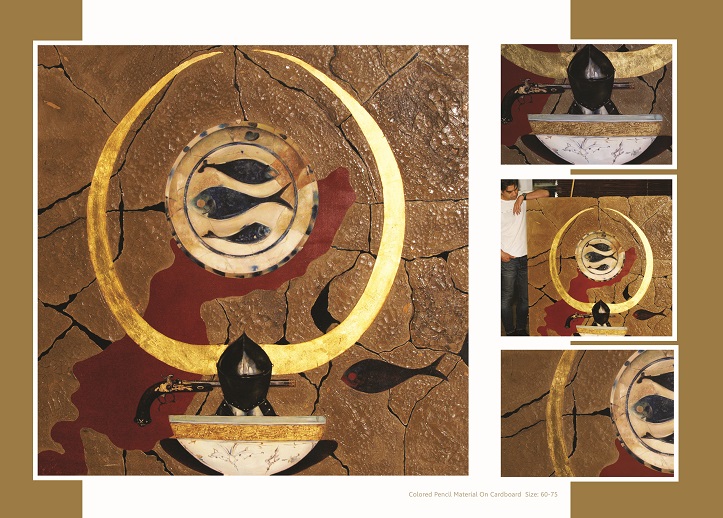
Mistr Ahmad Najafi | Malíř & Konceptuální umělec – od Teheránu po globální uměleckou scénu .Ahmad Najafi je vizionářský íránský umělec, jehož cesta malbou a kresbou začala v letech dospívání v Teheránu.. S vášní, která přetrvává desítky let, vytvořil jedinečný hlas napříč různými uměleckými styly, včetně koncepčních, abstraktní, surrealista, a realistické výrazy. Jeho umělecká díla jsou vytvořena pomocí široké škály technik a materiálů — od olejové barvy, pastely, barevné tužky, dřevěné uhlí, kvaš, a zlatý list, na plátna, dřevo, a tradiční íránské tkaniny. Každý kus odráží hluboké emocionální jádro, poetické spojení mezi vnitřní zkušeností a vnější formou. Od 1999, Mistr Najafi aktivně vyučuje malbu ve svém soukromém studiu, kde vyškolil a inspiroval novou generaci milovníků umění. S velkou hrdostí, uvedl řadu studentů do světa výtvarného umění – nejen v Íránu, ale i po celém světě. Prostřednictvím online a virtuálních tříd, pracoval se studenty z Austrálie, Kanada, Spojené království, Spojené státy americké, Turecko, Spojené arabské emiráty, Omán, Kuvajt, a mnoho dalších zemí. Vedl také osobní workshopy, včetně sezení pro členy tradičních aristokratických rodin v částech arabského světa. Najafiho obrazy byly vystaveny a získány sběrateli a galeriemi po celém světě. K dnešnímu dni, stovky jeho originálních děl – každé se svým vlastním příběhem a duchem – byly zakoupeny nebo objednány na mezinárodní úrovni, a vystaveny v soukromých galeriích v zemích, jako jsou SAE, Omán, Katar, Kuvajt, Spojené království, USA, Čína, Japonsko, Austrálie, Turecko, Rusko, Itálie, Španělsko, a dále. Jeho kousky jsou obdivovány nejen pro svou estetickou krásu, ale také jako sběratelské investice, o které se starají nadšenci do umění i profesionální sběratelé.. Přišli jsme ze srdce starověkých civilizací do vaší budoucnosti – a mistr Ahmad Najafi je jedním z nejvíce inspirativních vyslanců této cesty..

„V tomto pomíjivém světě, žádné vlastnictví není trvalé; možnost vychutnat si tyto jedinečné poklady nás prošla, a teď je řada na vás, abyste je vlastnili, vidět, dotek, a sdílet tato cenná umělecká díla s budoucími generacemi.“

Mistr Rasoulian | Mistr dřevěné intarzie (Moarrak) a reliéfní řezba – od nadčasových kořenů po mistra světového mistra Rasouliana, narozený v Íránu, pochází z rodiny hluboce zakořeněné v tradicích umění. Vyrostl v domácnosti, kde byly ručně tkané koberce rodinným dědictvím a melodie tradiční hudby a vokály naplnily vzduch, jeho vášeň pro umění byla živena od raného věku. Důvěrně se seznámil s každou fází ruční výroby koberců a vyvinul výjimečné dovednosti v různých aspektech tohoto řemesla. Toto hluboké spojení s tradičním uměním ho přivedlo k formálnímu vzdělání v oblasti ručních řemesel. V 2005, vystudoval uměleckou průmyslovou školu a později získal bakalářský titul v oboru Design koberců, prohloubení jeho akademického i uměleckého porozumění. Jeho vystavení složité geometrii vzorů koberců a klasické malířské estetice ho přirozeně přivedlo do světa dřevěných intarzií. (Moarrak) a reliéfní řezba (Monabbat). Od té doby, Mistr Rasoulian vytvořil stovky pozoruhodných děl – od dřevěných intarzovaných panelů a složitě vyřezávaného nábytku až po luxusní ozdobné stoly.. Každý jeho kousek je jedinečným spojením tradice, osobní výraz, a vytříbená technika. Jeho mistrovská díla byla hrdě exportována do zemí včetně Spojených arabských emirátů, Kuvajt, Katar, Spojené království, Spojené státy americké, a mnoho dalších, a našli domovy v soukromých galeriích a prestižních sbírkách po celém světě. Jeho umění slouží jako most mezi slavnou minulostí a kreativní budoucností v globálním umění – díla, která nejen vdechují život dřevu, ale poeticky vyjadřují krásu, harmonie, a trvalého ducha lidstva napříč civilizacemi a kulturami. Přišli jsme ze srdce starověkých civilizací, abychom utvářeli vaši budoucnost – a mistr Rasoulian je jedním z trvalých hlasů této nadčasové cesty..

Mistr Hossein Bishe’i | Housle, které mluví, Nejen zvuk
Mistr Hossein Bishe’i se narodil v Teheránu – městě, kde zvuk žije v samotné struktuře života – a věnuje se více než tři desetiletí hledání čisté hudební formy.. Zahájení své cesty v 1986 s tvorbou santur, později prozkoumal dehet, a od té doby 2003, své řemeslo plně zasvětil houslím – západnímu nástroji znovuzrozenému v jeho rukou jako předmětu zvuku i umění.. Každý z jeho nástrojů je zcela ručně vyrobený. Od pečlivě vybraných dřev až po akusticky propracované detaily, Bishe’i vytváří mistrovské housle – kusy, které soupeří s kvalitou, kterou najdete jen v hrstce dílen po celém světě. Jeho díla překročila hranice. Housle od Hossein Bishe’i se dostaly k náročným hudebníkům a sběratelům ve Spojených arabských emirátech, Katar, Kuvajt, Španělsko, Itálie, Spojené království, Kanada, Spojené státy americké, a dále. Dnes, na jeho nástroje se hraje na pěti kontinentech, každý nese jedinečný hlas – slyšitelný podpis umělce, který jej formoval. Pro mistra Bishe’i, housle nejsou pouze nástrojem, ale nádoba ducha. Jeho řemeslem je dialog se dřevem – přeměna kdysi živých stromů v nádoby věčného zvuku. Nejsou to jen nástroje. Jsou to umělecká díla. Jsou to hlasy. A pokaždé se hraje na jedny z jeho houslí, ozývá to nejen poznámku, ale slib: "Přišli jsme ze srdce starověkých civilizací do vaší budoucnosti."
uvidíme se brzy

Yashar Malfouzi Jmenuji se Yashar Malfouzi (1978) a narodil jsem se v Tabrizu, Írán, do rodiny, která se plně věnovala podnikání v oblasti výroby a distribuce ručně vyráběných koberců a koberečků, pro 4 generace. O kobercové umění jsem se velmi zajímal od samého začátku mého dětství, a ve věku let 12, Získal jsem titul mistra ve tkaní koberců; a naučil se všechno tkaní, opravy a dokonce i procesy barvení. Ve věku let 15, Začal jsem dělat reliéfní a 3D vzory na koberce a koberečky, pomocí technik samouka. Abych dále pokročil ve svém učení, znalosti a techniky, Na univerzitu jsem nastoupil v roce 2011, a mohl odmaturovat s vyznamenáním, pouze v 6 semestry, z umělecké univerzity, s titulem Carpet Designing Art. Poté, abych se dále vzdělával a obohacoval své znalosti, I started a master's degree in Arts History, kterou jsem ukončil s vyznamenáním a získal jsem státní umělecký titul. Moje práce se také umístily na prvním místě: Festival kreativity a inovace islámské tvorby, Festival Rashidi, Top festival koberců v Tabrizu (dva roky po sobě). V posledním 25 let, Komercializoval jsem 30,000 koberce a koberečky a od r 2011, Své jedinečné umělecké koberce jsem začal předkládat do různých částí světa. Měl bych podotknout, že moje díla jsou kompletně ručně vyráběná tradičním způsobem, a každé dílo má svůj jedinečný význam, který byl vložen do reliéfního vzoru koberečků. Tyto koberce mají dekorativní účel a montují se na zeď. Tyto reliéfní koberce s 3D povrchovým vzorem, byly odeslány do USA, Kanada, Švýcarsko, Japonsko, Katar, Kuvajt, Spojené arabské emiráty, Německo a několik dalších zemí.