



Musical Intrusmants
Musical Instruments: A Bridge from the Heart of History to the Future of Art
Introduction Music is the universal language of civilizations. From the earliest natural sounds to the most intricate melodies of today, musical instruments have played a crucial role in shaping cultures, rituals, and global artistry. Each instrument carries a story—its roots in history, the hands that crafted it, and the melodies it brings to life. At Art Gulf, we have curated a collection of unique, entirely( handmade )i (mastercrafted) musical instruments, preserving the legacy of civilizations while paving the way for the future of music.
This article explores different types of instruments, their historical significance, the oldest musical instruments in the world, and particularly the instruments rooted in Iran, Oman, Morocco, Egypt, Xina, India, and Italy. Finally, we discuss their value as both artistic and financial investments for collectors, musicians, and music scholars.
1.Main Categories of Musical Instruments:
Musical instruments are generally classified into four main categories:
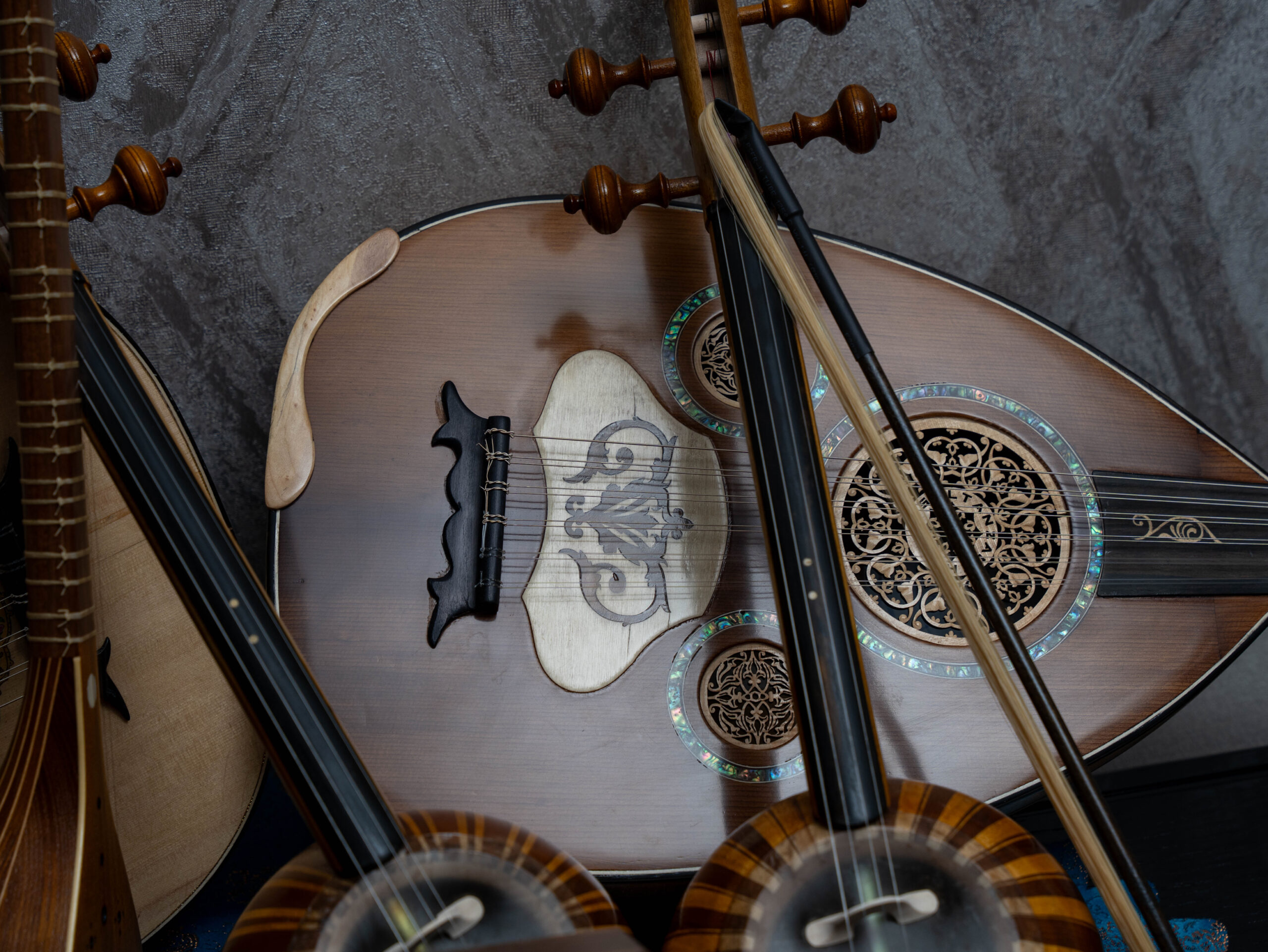
1. String Instruments (Chordophones): Includes Tar, Setar, Oud, Kamancheh, Violin, Qanun, and Santur.
2. Percussion Instruments (Membranophones & Idiophones): Includes Tonbak, Daf, Tabla, and Bendir.
3. Wind Instruments (Aerophones): Includes Ney, Duduk, Sheng (Xina), Egyptian Nai, and Indian Shehnai.
4. Keyboard Instruments: Includes the Organ, Harpsichord, and Harmonium.
2. The Oldest Musical Instruments in the World:
1. Ancient Instruments and Their Origins
• Iran: Depictions of string instruments such as the Tar and Kamancheh have been discovered in ancient Persian paintings and seals from the Achaemenid and Parthian eras.
• Egypt: Ancient reliefs in Egyptian temples depict the Ney and Qanun, emphasizing their role in sacred and royal ceremonies.
• China: The Sheng, one of the oldest wind instruments, was crafted over 3,000 years ago.
• India: Instruments like the Sarod and Sitar are among the world’s oldest string instruments, still used in Indian classical music.
• Italy: Italy played a key role in the development of the Violin. Esteemed makers like Stradivarius in the 17th and 18th centuries crafted instruments that remain some of the most valuable in the world.
• Morocco & Oman: Various stringed and percussion instruments have deep connections to Berber and Arabic music traditions.
2. Instruments That Have Stood the Test of Time
• Oud: Originating from Mesopotamia, this versatile instrument inspired many string instruments across the world.
• Qanun: With a history of over 2,000 anys, this instrument is central to Middle Eastern, turc, and North African music.
• Kamancheh: A bowed string instrument integral to Persian and Central Asian music.
• Santur: With Persian origins, this hammered dulcimer has influenced music from India to Greece and Europe.
• Violin: Emerging from Italy, the violin has become a fundamental instrument in both Western and Eastern classical music.
3. Prominent Musical Instruments by Country
1. Iran
• Tar: Made from mulberry wood and lambskin, known for its deep and expressive tone.
• Setar: A delicate instrument used in Persian Sufi music.
• Kamancheh: A crucial bowed string instrument in Persian music.
• Santur: A trapezoidal hammered dulcimer with 72 strings, producing a mesmerizing sound.
• Tonbak: The principal goblet drum of Persian music, known for its intricate techniques.
2. Oman
• Oud: Crafted from high-quality woods like rosewood and walnut, producing a distinctive sound.
• Omani Daf: A frame drum used in traditional and ceremonial music.
3. Morocco
• Guembri: A plucked string instrument used in Gnawa music.
• Bendir: A large frame drum integral to Moroccan folk music.
4. Egypt
• Egyptian Ney: A reed flute that holds a significant place in Arabic classical music.
• Qanun: A key instrument in Arabic and Middle Eastern classical traditions.
5. China
• Sheng: One of the earliest known wind instruments, still played in traditional Chinese music.
• Guzheng: A zither-like instrument, similar to the Qanun but played with unique techniques. 6. India
• Sitar: A fundamental instrument in Hindustani classical music, known for its unique resonant sound.
• Tabla: A percussion instrument used for intricate rhythmic patterns.
7. Italy
• Violin: First developed in 16th-century Italy, the violin remains one of the most prestigious instruments in global classical music.
4. The Value of Handmade Musical Instruments:
Handmade and mastercrafted instruments not only have great artistic value but also serve as highly valuable investments over time. Factors Affecting the Value of an Instrument.
• Material and craftsmanship (e.g., walnut, rosewood, and mulberry for instruments like the Tar and Oud).
• Handmade quality and artisan skill (Master luthiers often leave a signature or mark on high-end instruments).
• Historical significance and rarity (Antique and limited-edition instruments have increased value).
• Sound quality and international standards (Certain instruments are crafted for professional performances, enhancing their market value).
5. Musical Instruments as a Cultural Investment For Collectors Handmade instruments not only have cultural and historical significance but also appreciate in value over time, making them worthy additions to private collections and museums.
For Musicians and Artists Owning a handmade instrument means possessing a unique tool that offers an unparalleled sound and personal connection to the music.
For Scholars and Enthusiasts Understanding the history and philosophy behind these instruments deepens one’s appreciation and knowledge of music. Conclusion: Music is a bridge that connects the past to the future. Every instrument is an ambassador of civilization, continuing its journey through the hands of today’s artisans and musicians. At Art- Gulf.com, we have gathered a collection of exceptional, handmade musical instruments that are not just historical treasures but also investments in the future of music.
In our sales section, each of these mastercrafted instruments is available with detailed information, valuation, and pricing.
Handicrafts
Handicrafts: From the Heart of Ancient Civilizations to the Investment of the Future Introduction:
A Timeless Legacy in Our Hands Handicrafts are more than just artistic creations—they are reflections of the soul and identity of great civilizations, from Iran, Egypt, India, and China to Oman and Morocco. These ancient arts serve as a bridge between the past and the future, each piece telling a unique story of culture, civilization, and creativity. In today’s world, where mass production dominates, handicrafts hold their ground, not only for their artistic value but also for their economic and investment potential.
The Origins of Handicrafts in Human History The first signs of handicrafts date back to the Paleolithic era, around 30,000 to 40,000 years ago, when early humans used bones, fusta, and stones for survival and artistic expression. However, the earliest documented artistic and handcrafted works belong to 10,000 to 12,000 years ago, when great civilizations like Sumer, Ancient Egypt, Persia, Xina, and India began creating remarkable and lasting artifacts.
The Oldest Handicraft Discoveries in the World:
1. Painted Pottery from Susa (Iran) – Around 8,000 years ago
2. Stone Seals from Mesopotamia – Over 7,000 years ago
3. Gold Jewelry and Gemstone Art from Ancient Egypt – 5,000 years ago
4. Chinese Silk Weaving – Over 4,500 years ago
5. Intricate Woven Fabrics from India – Over 4,000 years ago
6. Mosaic Pottery from Morocco and Oman – 3,000 years ago.
These discoveries highlight how handicrafts have always played a fundamental role in human civilization, serving not only practical purposes but also acting as cultural and artistic expressions of societies.
Handmade or a Living Art?
Avui, terms like Handmade or Handicraft are commonly used to describe artisan products, yet these items are much more than just manually crafted objects. They carry the history, culture, and aesthetic philosophy of some of the greatest civilizations. Whether from Iran, Egypt, Morocco, Oman, India, or China, handicrafts reflect the artistic mastery and unique identity of their origins.
Why Handicrafts from Great Civilizations?
1. Authenticity and Unique Art: Handicrafts from civilizations such as Iran, Egypt, India, Xina, Oman, and Morocco are the result of thousands of years of craftsmanship, filosofia, and artistic excellence.
2. A Valuable Investment: Unlike mass-produced goods, handicrafts not only retain their value over time but often appreciate. Collectors and art investors recognize this market as both secure and promising.
3. The Uniqueness of Every Piece: Each handcrafted item is one-of-a-kind. Owning a miniature Susa pottery, an Indian woven textile, or a Moroccan rug means holding a tangible piece of history and heritage.
4. A Link to Civilizations: We are the ambassadors of the world’s ancient civilizations. Handicrafts serve as a universal language, connecting people through time and culture.
The Global Market and the Future of Handicrafts With the rising demand for sustainable and authentic art, handicrafts have attracted increasing attention from investors and collectors. While digital art and NFTs are on the rise, physical handicrafts remain irreplaceable, maintaining their strong position among galleries, collectors, and art enthusiasts. Avui, purchasing handicrafts is not only an artistic choice but also a strategic financial investment.
Conclusion: A Bridge Between Art, Investment, and the Future We are witnessing a global return to authenticity. In a world that seeks deeper connections with history, art, and culture, handicrafts remain among the most valuable assets one can invest in. Whether you are a seasoned collector or an investor searching for a dynamic and appreciating market, handicrafts from the world’s greatest civilizations open the door to beauty, value, and timeless craftsmanship.
On our platform: Art-Gulf.com you will not only experience living art but also gain the opportunity to explore and invest in the eternal world of handicrafts.
Catifa
Catifa: A Unique Jewel from the Heart of History, for Your Future
A Masterpiece, An Investment, A Timeless Legacy We have come from the heart of ancient civilizations to shape your future. What lies before you is not just a carpet—it is thousands of years of art, culture, and human civilization woven into every thread. Our carpets are not newly created; they have been centuries in the making.
Every knot is a continuation of a journey that began in the empires of antiquity, flourished under the Safavid dynasty, and has been passed down through generations of master artisans. Owning one of these carpets means becoming the custodian of a living history.
A Singular Piece of History, in Your Hands In a world where rarity defines true value, each of these carpets is one of a kind. No two pieces are alike, and each carries a unique story within its intricate patterns. Once sold, they will never be available again. These are not just carpets—they are ambassadors of civilization.
They have journeyed through the courts of Persian kings, adorned palaces, and stood as testaments to the brilliance of Iranian craftsmanship. Now, they stand before you, offering the chance to own an irreplaceable masterpiece. Value That Increases Over Time What makes a Persian carpet a priceless asset?
• A handcrafted work of art, not a mass-produced item.
• A one-of-a-kind masterpiece, not a replicated design.
• An investment that appreciates over time, not a fleeting purchase.
Just as paintings by Da Vinci and Rembrandt gain value with time, authentic Persian carpets are treasures that only grow more valuable with each passing year. An Exclusive Club, for Those Who Understand True Value This collection is reserved for individuals who recognize the depth of art, heritage, and timeless worth. You are not just a buyer—you are a guardian of cultural legacy. Your Last Chance to Own a Historic Masterpiece With each passing day, another one of these masterpieces leaves our collection forever. If you are ready to own a piece of history and secure an asset of lasting value, do not let this moment pass.
In Art-Gulf.com ,This is not just a purchase—this is a choice for eternity. We have come from the heart of ancient civilizations to shape your future.
I’ve been Curaturing since 1999
We invite artists, leading galleries, renowned collectors, and investors from around the world to join us on this unique platform—where art reaches its true value.


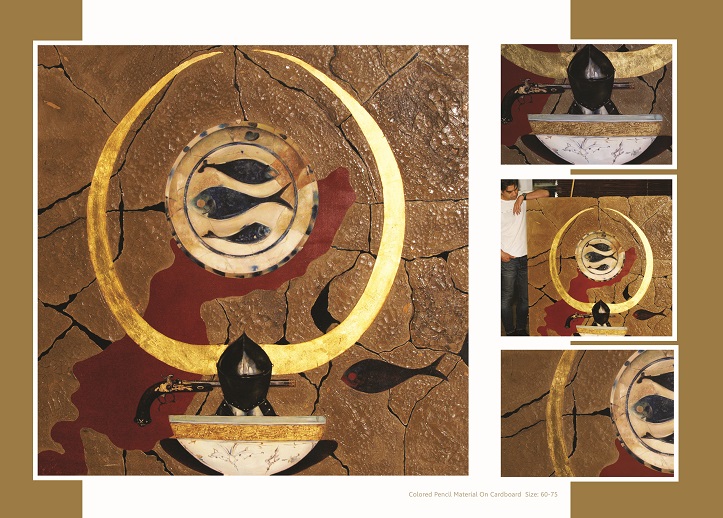
Mestre Ahmad Najafi | Pintor & Artista conceptual: de Teheran a l'escena global de l'art. Ahmad Najafi és un artista iranià visionari el viatge del qual en la pintura i el dibuix va començar en la seva adolescència a Teheran.. Amb una passió que ha perdurat durant dècades, ha establert una veu única a través de diversos estils artístics, inclòs el conceptual, abstracte, surrealista, i expressions realistes. Les seves obres d'art estan fetes amb una àmplia gamma de tècniques i materials, des de la pintura a l'oli, pastels, llapis de colors, carbó vegetal, guaix, i fulla d'or, als llenços, fusta, i teixits tradicionals iranians. Cada peça reflecteix un nucli emocional profund, una connexió poètica entre l'experiència interior i la forma exterior. Des que 1999, El mestre Najafi ha estat activament ensenyant pintura al seu estudi privat, on ha format i inspirat una nova generació d'amants de l'art. Amb gran orgull, ha introduït nombrosos estudiants al món de les belles arts, no només a l'Iran sinó també a nivell mundial. A través de classes virtuals i online, ha treballat amb estudiants d'Austràlia, Canadà, el Regne Unit, els Estats Units, Turquia, els Emirats Àrabs Units, Oman, Kuwait, i molts altres països. També ha dirigit tallers presencials, incloses sessions per a membres de famílies aristocràtiques tradicionals a parts del món àrab. Les pintures de Najafi han estat exposades i adquirides per col·leccionistes i galeries d'arreu del món. Fins a la data, centenars de les seves obres originals, cadascuna amb la seva pròpia narrativa i esperit, s'han comprat o encarregat internacionalment, i es mostra a galeries privades de països com els Emirats Àrabs Units, Oman, Qatar, Kuwait, el Regne Unit, EUA, Xina, Japó, Austràlia, Turquia, Rússia, Itàlia, Espanya, i més enllà. Les seves peces són admirades no només per la seva bellesa estètica, sinó també com a inversions col·leccionables apreciades tant pels entusiastes de l'art com pels col·leccionistes professionals.. Hem vingut del cor de les antigues civilitzacions al vostre futur, i el mestre Ahmad Najafi és un dels ambaixadors més inspiradors d'aquest viatge..

“En aquest món fugaç, cap propietat és permanent; l'oportunitat de gaudir d'aquests tresors únics ha passat per nosaltres, i ara et toca posseir, veure, tocar, i compartir aquestes valuoses obres d'art amb les generacions futures”.

Mestre Rasoulian | Mestre d'incrustacions de fusta (Moarraq) i talla en relleu: des d'arrels atemporals fins a obres mestres globals, mestre Rasoulian, nascut a l'Iran, prové d'una família molt arrelada a les tradicions de l'art. Criat en una llar on les catifes teixides a mà eren patrimoni de la família i les melodies de la música tradicional i la veu omplien l'aire, la seva passió per l'art es va nodrir des de ben petit. Es va familiaritzar íntimament amb totes les etapes de la producció de catifes fetes a mà i va desenvolupar una habilitat excepcional en els diferents aspectes d'aquesta artesania.. Aquesta profunda connexió amb les arts tradicionals el va portar a seguir una educació formal en el camp de l'artesania. En 2005, es va graduar en una escola tècnica d'art i més tard va obtenir una llicenciatura en disseny de catifes, aprofundint la seva comprensió tant acadèmica com artística. La seva exposició a la complexa geometria dels patrons de les catifes i l'estètica de la pintura clàssica el va atraure naturalment cap al món de la incrustació de fusta. (Moarraq) i talla en relleu (Monabbat). Des de llavors, El mestre Rasoulian ha creat centenars d'obres notables, que van des de panells d'incrustacions de fusta i mobles tallats amb intricació fins a taules ornamentals de luxe.. Cadascuna de les seves peces és una fusió única de tradició, expressió personal, i tècnica refinada. Les seves obres mestres s'han exportat amb orgull a països com els Emirats Àrabs Units, Kuwait, Qatar, el Regne Unit, els Estats Units, i molts altres, i han trobat cases en galeries privades i col·leccions prestigioses arreu del món. nEl seu art serveix de pont entre un passat gloriós i un futur creatiu en l'art global: obres que no només donen vida a la fusta, sinó que expressen poèticament la bellesa., harmonia, i l'esperit perdurable de la humanitat a través de civilitzacions i cultures. Hem vingut del cor de civilitzacions antigues per donar forma al vostre futur, i el mestre Rasoulian és una de les veus perdurables d'aquest viatge atemporal..

Mestre Hossein Bishe'i | Violins que parlen, No només so
Nascut a Teheran, una ciutat on el so viu en el mateix teixit de la vida, el mestre Hossein Bishe'i s'ha dedicat durant tres dècades a la recerca de la forma musical pura.. Comença el seu viatge a 1986 amb l'elaboració del santur, més tard va explorar el quitrà, i des que 2003, ha dedicat plenament el seu ofici al violí, un instrument occidental que renaix a les seves mans com a objecte tant de so com d'art.. Cadascun dels seus instruments és totalment artesanal. Des de fustes acuradament seleccionades fins a detalls acústicament refinats, Bishe'i crea violins fets per mestres, peces que rivalitzen amb la qualitat que es troba només en un grapat de tallers arreu del món.. Les seves obres han transcendit fronteres. Els violins d'Hossein Bishe'i han arribat a músics i col·leccionistes més exigents dels Emirats Àrabs Units., Qatar, Kuwait, Espanya, Itàlia, el Regne Unit, Canadà, els Estats Units, i més enllà. Avui, els seus instruments es toquen als cinc continents, cadascun amb una veu única: una signatura audible de l'artista que la va donar forma. Per al mestre Bishe'i, el violí no és només una eina, sinó un recipient d'esperit. El seu ofici és un diàleg amb la fusta: una transformació d'arbres que abans vivien en recipients de so etern. Aquests no són només instruments. Són obres d'art. Són veus. I cada vegada que es toca un dels seus violins, no es fa ressò només d'una nota, sinó una promesa: "Hem vingut del cor de les civilitzacions antigues al vostre futur".
fins aviat

Yashar Malfouzi Em dic Yashar Malfouzi (1978) i vaig néixer a Tabriz, Iran, en una família que es dedicava plenament al negoci de producció i distribució de catifes i catifes fetes a mà, per 4 generacions. Em va interessar molt l'art de les catifes des del principi de la meva infància, i a l'edat de 12, Vaig obtenir el meu estat de mestre en teixit de catifes; i va aprendre tot el teixit, processos de reparació i fins i tot de tintura. A l'edat de 15, Vaig començar a fer patrons en relleu i 3D en catifes i catifes, utilitzant tècniques autodidactes. Per avançar encara més en el meu aprenentatge, coneixements i tècniques, Vaig entrar a la universitat l'any 2011, i es va poder graduar amb honors, en només 6 semestres, de la Universitat d'Art, amb el grau d'Art Disseny de Catifes. Després, continuar la meva formació i enriquir els meus coneixements, I started a master's degree in Arts History, que vaig acabar amb honors i vaig rebre el Grau d'Art de l'Estat. Les meves obres també han quedat en primer lloc: Festival de la Creativitat i la Innovació del treball islàmic, Festival Rashidi, Top Festival de catifes de Tabriz (dos anys seguits). En l'últim 25 anys, He comercialitzat 30,000 catifes i catifes i des de l'any 2011, He començat a presentar les meves catifes artístiques úniques a diverses parts del món. Cal destacar que les meves obres estan fetes totalment a mà de manera tradicional, i cada obra té el seu significat únic, que s'ha incrustat al patró en relleu de les catifes. Aquestes catifes tenen una finalitat decorativa i estan muntades a la paret. Aquestes catifes en relleu amb un patró de superfície 3D, han estat enviats als EUA, Canadà, Suïssa, Japó, Qatar, Kuwait, els Emirats Àrabs Units, Alemanya i molts altres països.