



Musical Intrusmants
Musical Instruments: A Bridge from the Heart of History to the Future of Art
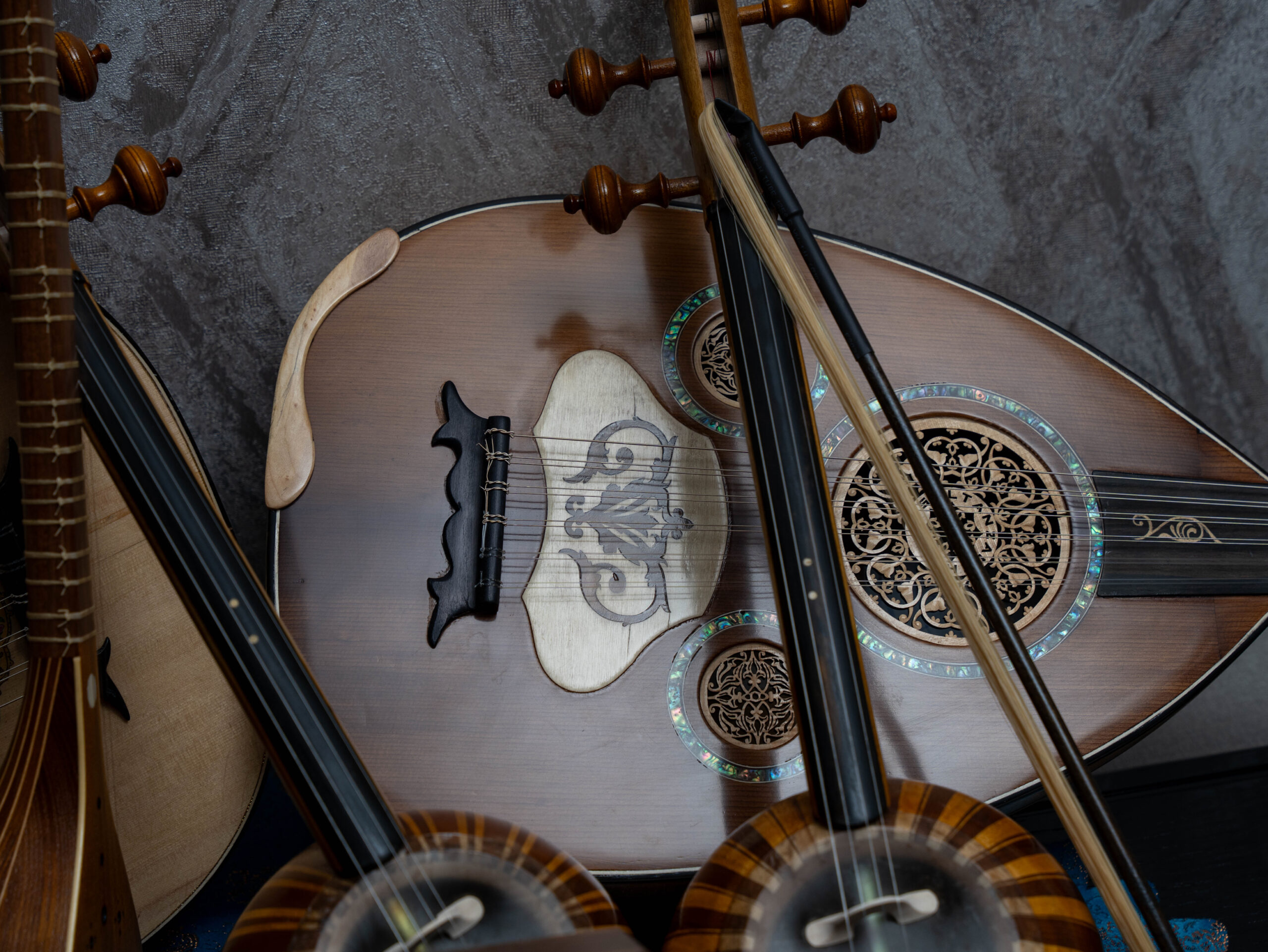
Introduction Music is the universal language of civilizations. From the earliest natural sounds to the most intricate melodies of today, musical instruments have played a crucial role in shaping cultures, rituals, and global artistry. Each instrument carries a story—its roots in history, the hands that crafted it, and the melodies it brings to life. At Art Gulf, we have curated a collection of unique, entirely( handmade )en (mastercrafted) musical instruments, preserving the legacy of civilizations while paving the way for the future of music.
This article explores different types of instruments, their historical significance, the oldest musical instruments in the world, and particularly the instruments rooted in Iran, Oman, Morocco, Egypt, China, India, and Italy. Finally, we discuss their value as both artistic and financial investments for collectors, musicians, and music scholars.
1.Main Categories of Musical Instruments:
Musical instruments are generally classified into four main categories:
1. String Instruments (Chordophones): Includes Tar, Setar, Oud, Kamancheh, Violin, Qanun, and Santur.
2. Percussion Instruments (Membranophones & Idiophones): Includes Tonbak, Daf, Tabla, and Bendir.
3. Wind Instruments (Aerophones): Includes Ney, Duduk, Sheng (China), Egyptian Nai, and Indian Shehnai.
4. Keyboard Instruments: Includes the Organ, Harpsichord, and Harmonium.
2. The Oldest Musical Instruments in the World:
1. Ancient Instruments and Their Origins
• Iran: Depictions of string instruments such as the Tar and Kamancheh have been discovered in ancient Persian paintings and seals from the Achaemenid and Parthian eras.
• Egypt: Ancient reliefs in Egyptian temples depict the Ney and Qanun, emphasizing their role in sacred and royal ceremonies.
• China: The Sheng, one of the oldest wind instruments, was crafted over 3,000 years ago.
• India: Instruments like the Sarod and Sitar are among the world’s oldest string instruments, still used in Indian classical music.
• Italy: Italy played a key role in the development of the Violin. Esteemed makers like Stradivarius in the 17th and 18th centuries crafted instruments that remain some of the most valuable in the world.
• Morocco & Oman: Various stringed and percussion instruments have deep connections to Berber and Arabic music traditions.
2. Instruments That Have Stood the Test of Time
• Oud: Originating from Mesopotamia, this versatile instrument inspired many string instruments across the world.
• Qanun: With a history of over 2,000 jare, this instrument is central to Middle Eastern, Turkish, and North African music.
• Kamancheh: A bowed string instrument integral to Persian and Central Asian music.
• Santur: With Persian origins, this hammered dulcimer has influenced music from India to Greece and Europe.
• Violin: Emerging from Italy, the violin has become a fundamental instrument in both Western and Eastern classical music.
3. Prominent Musical Instruments by Country
1. Iran
• Tar: Made from mulberry wood and lambskin, known for its deep and expressive tone.
• Setar: A delicate instrument used in Persian Sufi music.
• Kamancheh: A crucial bowed string instrument in Persian music.
• Santur: A trapezoidal hammered dulcimer with 72 strings, producing a mesmerizing sound.
• Tonbak: The principal goblet drum of Persian music, known for its intricate techniques.
2. Oman
• Oud: Crafted from high-quality woods like rosewood and walnut, producing a distinctive sound.
• Omani Daf: A frame drum used in traditional and ceremonial music.
3. Morocco
• Guembri: A plucked string instrument used in Gnawa music.
• Bendir: A large frame drum integral to Moroccan folk music.
4. Egypt
• Egyptian Ney: A reed flute that holds a significant place in Arabic classical music.
• Qanun: A key instrument in Arabic and Middle Eastern classical traditions.
5. China
• Sheng: One of the earliest known wind instruments, still played in traditional Chinese music.
• Guzheng: A zither-like instrument, similar to the Qanun but played with unique techniques. 6. India
• Sitar: A fundamental instrument in Hindustani classical music, known for its unique resonant sound.
• Tabla: A percussion instrument used for intricate rhythmic patterns.
7. Italy
• Violin: First developed in 16th-century Italy, the violin remains one of the most prestigious instruments in global classical music.
4. The Value of Handmade Musical Instruments:
Handmade and mastercrafted instruments not only have great artistic value but also serve as highly valuable investments over time. Factors Affecting the Value of an Instrument.
• Material and craftsmanship (e.g., walnut, rosewood, and mulberry for instruments like the Tar and Oud).
• Handmade quality and artisan skill (Master luthiers often leave a signature or mark on high-end instruments).
• Historical significance and rarity (Antique and limited-edition instruments have increased value).
• Sound quality and international standards (Certain instruments are crafted for professional performances, enhancing their market value).
5. Musical Instruments as a Cultural Investment For Collectors Handmade instruments not only have cultural and historical significance but also appreciate in value over time, making them worthy additions to private collections and museums.
For Musicians and Artists Owning a handmade instrument means possessing a unique tool that offers an unparalleled sound and personal connection to the music.
For Scholars and Enthusiasts Understanding the history and philosophy behind these instruments deepens one’s appreciation and knowledge of music. Conclusion: Music is a bridge that connects the past to the future. Every instrument is an ambassador of civilization, continuing its journey through the hands of today’s artisans and musicians. At Art- Gulf.com, we have gathered a collection of exceptional, handmade musical instruments that are not just historical treasures but also investments in the future of music.
In our sales section, each of these mastercrafted instruments is available with detailed information, valuation, and pricing.
Handicrafts
Handicrafts: From the Heart of Ancient Civilizations to the Investment of the Future Introduction:
A Timeless Legacy in Our Hands Handicrafts are more than just artistic creations—they are reflections of the soul and identity of great civilizations, from Iran, Egypt, India, and China to Oman and Morocco. These ancient arts serve as a bridge between the past and the future, each piece telling a unique story of culture, civilization, and creativity. In today’s world, where mass production dominates, handicrafts hold their ground, not only for their artistic value but also for their economic and investment potential.
The Origins of Handicrafts in Human History The first signs of handicrafts date back to the Paleolithic era, around 30,000 to 40,000 years ago, when early humans used bones, hout, and stones for survival and artistic expression. However, the earliest documented artistic and handcrafted works belong to 10,000 to 12,000 years ago, when great civilizations like Sumer, Ancient Egypt, Persia, China, and India began creating remarkable and lasting artifacts.
The Oldest Handicraft Discoveries in the World:
1. Painted Pottery from Susa (Iran) – Around 8,000 years ago
2. Stone Seals from Mesopotamia – Over 7,000 years ago
3. Gold Jewelry and Gemstone Art from Ancient Egypt – 5,000 years ago
4. Chinese Silk Weaving – Over 4,500 years ago
5. Intricate Woven Fabrics from India – Over 4,000 years ago
6. Mosaic Pottery from Morocco and Oman – 3,000 years ago.
These discoveries highlight how handicrafts have always played a fundamental role in human civilization, serving not only practical purposes but also acting as cultural and artistic expressions of societies.
Handmade or a Living Art?
Vandag, terms like Handmade or Handicraft are commonly used to describe artisan products, yet these items are much more than just manually crafted objects. They carry the history, culture, and aesthetic philosophy of some of the greatest civilizations. Whether from Iran, Egypt, Morocco, Oman, India, or China, handicrafts reflect the artistic mastery and unique identity of their origins.
Why Handicrafts from Great Civilizations?
1. Authenticity and Unique Art: Handicrafts from civilizations such as Iran, Egypt, India, China, Oman, and Morocco are the result of thousands of years of craftsmanship, filosofie, and artistic excellence.
2. A Valuable Investment: Unlike mass-produced goods, handicrafts not only retain their value over time but often appreciate. Collectors and art investors recognize this market as both secure and promising.
3. The Uniqueness of Every Piece: Each handcrafted item is one-of-a-kind. Owning a miniature Susa pottery, an Indian woven textile, or a Moroccan rug means holding a tangible piece of history and heritage.
4. A Link to Civilizations: We are the ambassadors of the world’s ancient civilizations. Handicrafts serve as a universal language, connecting people through time and culture.
The Global Market and the Future of Handicrafts With the rising demand for sustainable and authentic art, handicrafts have attracted increasing attention from investors and collectors. While digital art and NFTs are on the rise, physical handicrafts remain irreplaceable, maintaining their strong position among galleries, collectors, and art enthusiasts. Vandag, purchasing handicrafts is not only an artistic choice but also a strategic financial investment.
Conclusion: A Bridge Between Art, Investment, and the Future We are witnessing a global return to authenticity. In a world that seeks deeper connections with history, art, and culture, handicrafts remain among the most valuable assets one can invest in. Whether you are a seasoned collector or an investor searching for a dynamic and appreciating market, handicrafts from the world’s greatest civilizations open the door to beauty, value, and timeless craftsmanship.
On our platform: Art-Gulf.com you will not only experience living art but also gain the opportunity to explore and invest in the eternal world of handicrafts.
Tapyt
Tapyt: A Unique Jewel from the Heart of History, for Your Future
A Masterpiece, An Investment, A Timeless Legacy We have come from the heart of ancient civilizations to shape your future. What lies before you is not just a carpet—it is thousands of years of art, culture, and human civilization woven into every thread. Our carpets are not newly created; they have been centuries in the making.
Every knot is a continuation of a journey that began in the empires of antiquity, flourished under the Safavid dynasty, and has been passed down through generations of master artisans. Owning one of these carpets means becoming the custodian of a living history.
A Singular Piece of History, in Your Hands In a world where rarity defines true value, each of these carpets is one of a kind. No two pieces are alike, and each carries a unique story within its intricate patterns. Once sold, they will never be available again. These are not just carpets—they are ambassadors of civilization.
They have journeyed through the courts of Persian kings, adorned palaces, and stood as testaments to the brilliance of Iranian craftsmanship. Now, they stand before you, offering the chance to own an irreplaceable masterpiece. Value That Increases Over Time What makes a Persian carpet a priceless asset?
• A handcrafted work of art, not a mass-produced item.
• A one-of-a-kind masterpiece, not a replicated design.
• An investment that appreciates over time, not a fleeting purchase.
Just as paintings by Da Vinci and Rembrandt gain value with time, authentic Persian carpets are treasures that only grow more valuable with each passing year. An Exclusive Club, for Those Who Understand True Value This collection is reserved for individuals who recognize the depth of art, heritage, and timeless worth. You are not just a buyer—you are a guardian of cultural legacy. Your Last Chance to Own a Historic Masterpiece With each passing day, another one of these masterpieces leaves our collection forever. If you are ready to own a piece of history and secure an asset of lasting value, do not let this moment pass.
In Art-Gulf.com ,This is not just a purchase—this is a choice for eternity. We have come from the heart of ancient civilizations to shape your future.
I’ve been Curaturing since 1999
We invite artists, leading galleries, renowned collectors, and investors from around the world to join us on this unique platform—where art reaches its true value.


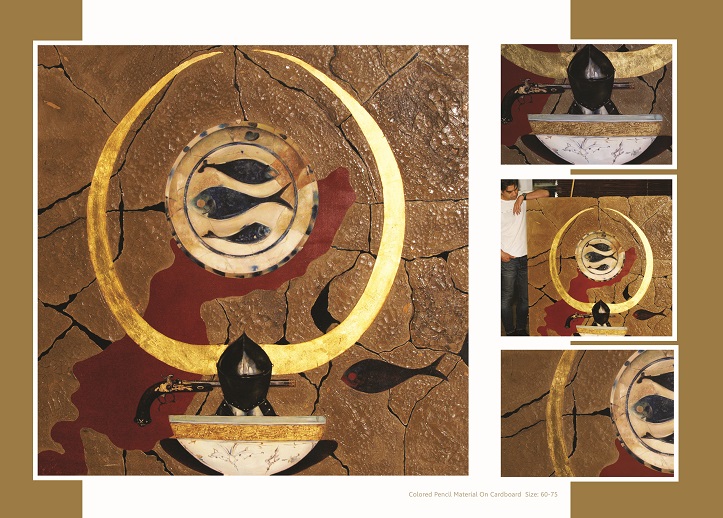
Meester Ahmad Najafafi | Skilder & Konseptuele Kunstenaar – Van Teheran tot die Global Art Scene .Ahmad Najafi is 'n visioenêre Iraanse kunstenaar wie se reis in skilder en teken begin het in sy tienerjare in Teheran. Met 'n passie wat vir dekades bestaan, hy het 'n unieke stem oor verskeie artistieke style gevestig, insluitend konseptuele, abstrak, surrealisties, en realistiese uitdrukkings. Sy kunswerke word vervaardig met behulp van 'n wye reeks tegnieke en materiale - van olieverf, pastelle, kleurpotlode, houtskool, gouache, en blaargoud, aan doeke, hout, en tradisionele Iraanse materiaal. Elke stuk weerspieël 'n diep emosionele kern, ’n poëtiese verband tussen innerlike ervaring en uiterlike vorm. Sedert 1999, Meester Najafi het aktief skilderkuns by sy private ateljee onderrig, waar hy 'n nuwe generasie kunsliefhebbers opgelei en geïnspireer het. Met groot trots, hy het talle studente aan die wêreld van beeldende kuns bekendgestel - nie net in Iran nie, maar ook wêreldwyd. Deur aanlyn en virtuele klasse, hy het met studente van Australië gewerk, Kanada, die Verenigde Koninkryk, die Verenigde State, Turkye, die Verenigde Arabiese Emirate, Oman, Koeweit, en baie ander lande. Hy het ook persoonlike werkswinkels gelei, insluitend sessies vir lede van tradisionele aristokratiese gesinne in dele van die Arabiese wêreld. Najafi se skilderye is uitgestal en verkry deur versamelaars en galerye regoor die wêreld. Tot op datum, honderde van sy oorspronklike werke - elk met sy eie verhaal en gees - is internasionaal aangekoop of in opdrag, en vertoon in private galerye in lande soos die VAE, Oman, Katar, Koeweit, die VK, VSA, China, Japan, Australië, Turkye, Rusland, Italië, Spanje, en verder. Sy stukke word nie net bewonder vir hul estetiese skoonheid nie, maar ook as versamelbare beleggings wat deur kuns-entoesiaste en professionele versamelaars gekoester word. Ons het uit die hart van antieke beskawings in jou toekoms gekom - en Meester Ahmad Najafi is een van die mees inspirerende ambassadeurs van hierdie reis.

“In hierdie vlietende wêreld, geen eienaarskap is permanent nie; die geleentheid om hierdie unieke skatte te geniet het deur ons gegaan, en nou is dit jou beurt om te besit, sien, raak, en deel hierdie waardevolle kunswerke met toekomstige geslagte.”

Meester Rasoulian | Meester van houtinleg (Moarrak) en Relief Carving – Van tydlose wortels tot globale meesterstukke Meester Rasoulian, in Iran gebore, kom uit 'n familie wat diep gewortel is in die tradisies van kuns. Grootgeword in 'n huishouding waar handgeweefde matte die familie se erfenis was en die melodieë van tradisionele musiek en sang die lug gevul het, sy passie vir kuns is van kleins af gekoester. Hy het intiem vertroud geraak met elke stadium van handgemaakte matproduksie en uitsonderlike vaardigheid ontwikkel in die verskillende aspekte van hierdie kunsvlyt. Hierdie diepgaande verbintenis met tradisionele kunste het daartoe gelei dat hy formele opleiding op die gebied van handwerk gevolg het. In 2005, hy het aan 'n tegniese kunsskool gegradueer en later 'n Baccalaureusgraad in Tapytontwerp verwerf, beide sy akademiese en artistieke begrip te verdiep. Sy blootstelling aan die komplekse geometrie van matpatrone en klassieke skilderkuns het hom natuurlik na die wêreld van houtinleg getrek (Moarrak) en reliëfsnywerk (Monabbat). Sedertdien, Meester Rasoulian het honderde merkwaardige werke geskep - wat wissel van houtinlegpanele en ingewikkelde gesnede meubels tot luukse ornamentele tafels. Elkeen van sy stukke is 'n unieke samesmelting van tradisie, persoonlike uitdrukking, en verfynde tegniek. Sy meesterstukke is met trots uitgevoer na lande insluitend die Verenigde Arabiese Emirate, Koeweit, Katar, die Verenigde Koninkryk, die Verenigde State, en vele ander, en het huise gevind in private galerye en gesogte versamelings regoor die wêreld. nSy kuns dien as 'n brug tussen 'n glorieryke verlede en 'n kreatiewe toekoms in globale kunstenaarskap—werke wat nie net lewe in hout blaas nie, maar skoonheid poëties uitdruk., harmonie, en die blywende gees van die mensdom oor beskawings en kulture heen. Ons het uit die hart van antieke beskawings gekom om jou toekoms te vorm - en Meester Rasoulian is een van die blywende stemme van hierdie tydlose reis.

Meester Hossein Bishe'i | Viole Wat Praat, Nie net klank nie
Gebore in Teheran - 'n stad waar klank in die struktuur van die lewe leef - Meester Hossein Bishe'i het meer as drie dekades gewy aan die strewe na suiwer musikale vorm. Begin sy reis in 1986 met die handwerk van die santur, hy het later die teer verken, en sedertdien 2003, hy het sy kuns ten volle aan die viool gewy - 'n Westerse instrument wat in sy hande hergebore is as 'n voorwerp van beide klank en kuns. Elkeen van sy instrumente is heeltemal handgemaak. Van noukeurig geselekteerde houtsoorte tot akoesties verfynde besonderhede, Bishe'i skep meestergeboude viole - stukke wat teen die kwaliteit kom wat in slegs 'n handjievol werkswinkels wêreldwyd gevind word. Sy werke het grense oorskry. Viole deur Hossein Bishe'i het oordeelkundige musikante en versamelaars in die Verenigde Arabiese Emirate bereik, Katar, Koeweit, Spanje, Italië, die Verenigde Koninkryk, Kanada, die Verenigde State, en verder. Vandag, sy instrumente word oor vyf kontinente bespeel, elkeen het 'n unieke stem—'n hoorbare handtekening van die kunstenaar wat dit gevorm het. Vir Meester Bishe'i, die viool is nie bloot 'n werktuig nie, maar 'n vat van gees. Sy handwerk is 'n dialoog met hout - 'n transformasie van eens lewende bome in vate van ewige klank. Dit is nie net instrumente nie. Hulle is kunswerke. Hulle is stemme. En elke keer word een van sy viole gespeel, dit eggo nie net 'n noot nie, maar 'n belofte: "Ons het uit die hart van antieke beskawings na jou toekoms gekom."
sien jou binnekort

Yashar Malfouzi My naam is Yashar Malfouzi (1978) en ek is in Tabriz gebore, Iran, in 'n familie wat ten volle betrokke was by die produksie en verspreiding van handgemaakte matte en matte, vir 4 geslagte. Ek was baie geïnteresseerd in tapytkuns van die begin van my kinderdae af, en op die ouderdom van 12, Ek het my Meesterstatus in matweef gekry; en al die weefwerk geleer, herstel- en selfs kleurprosesse. Op die ouderdom van 15, Ek het begin om reliëf- en 3D-patrone op matte en matte te maak, self-geleerde tegnieke te gebruik. Om my leer verder te bevorder, kennis en tegnieke, Ek het die universiteit in die jaar betree 2011, en kon met lof afstudeer, slegs in 6 semesters, van Kuns Universiteit, met Tapytontwerpkunsgraad. Daarna, om my opleiding voort te sit en om my kennis te verryk, I started a master's degree in Arts History, wat ek met lof voltooi het en ek het die Kunsgraad van die Staat ontvang. My werke is ook eerste in die ranglys: Fees van Kreatiwiteit en Innovasie van Islamitiese werk, Rashidi-fees, Top Tapytfees van Tabriz (twee jaar in 'n ry). In die laaste 25 jare, Ek het gekommersialiseer 30,000 matte en matte en sedert die jaar 2011, Ek het begin om my unieke artistieke matte aan verskeie dele van die wêreld voor te lê. Ek moet daarop wys dat my werke heeltemal handgemaak is op 'n tradisionele manier, en elke werk het sy eie unieke betekenis, wat op die reliëfpatroon van die matte ingebed is. Hierdie matte het dekoratiewe doel en word teen die muur gemonteer. Hierdie gebosseleerde matte met 3D-oppervlakpatroon, na die VSA gestuur is, Kanada, Switserland, Japan, Katar, Koeweit, die Verenigde Arabiese Emirate, Duitsland en verskeie ander lande.